API Endpoint Choreography in Merchant Account Ecosystems for Real-Time Billing Adjustments
Lars Schulz · Jul 21, 2026
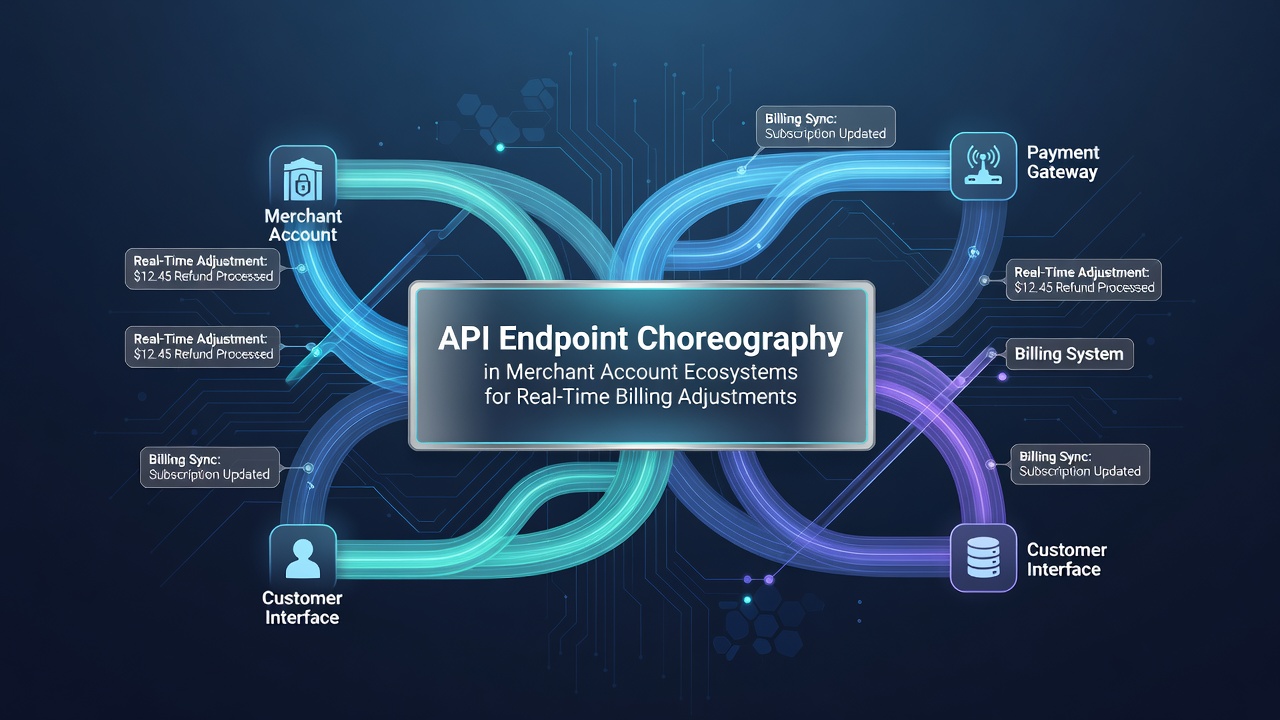
API Endpoint Choreography in Merchant Account Ecosystems for Real-Time Billing Adjustments
API endpoint choreography coordinates multiple services in merchant account ecosystems so that real-time billing adjustments occur without central orchestration, and systems respond to events as they happen. This pattern allows independent endpoints to exchange messages directly while maintaining consistency across billing ledgers, payment processors, and compliance layers. Observers note that choreography reduces single points of failure because each service publishes events and others subscribe to the ones they need.
How Choreography Differs from Orchestration in Payment Workflows
Traditional orchestration relies on a central controller that directs every step, yet choreography distributes decision-making so that each endpoint reacts according to predefined rules. Researchers have documented that this shift improves resilience when one service experiences latency or downtime. Data from payment networks in 2025 showed that systems using choreography maintained higher uptime during peak billing cycles compared with strictly orchestrated setups.
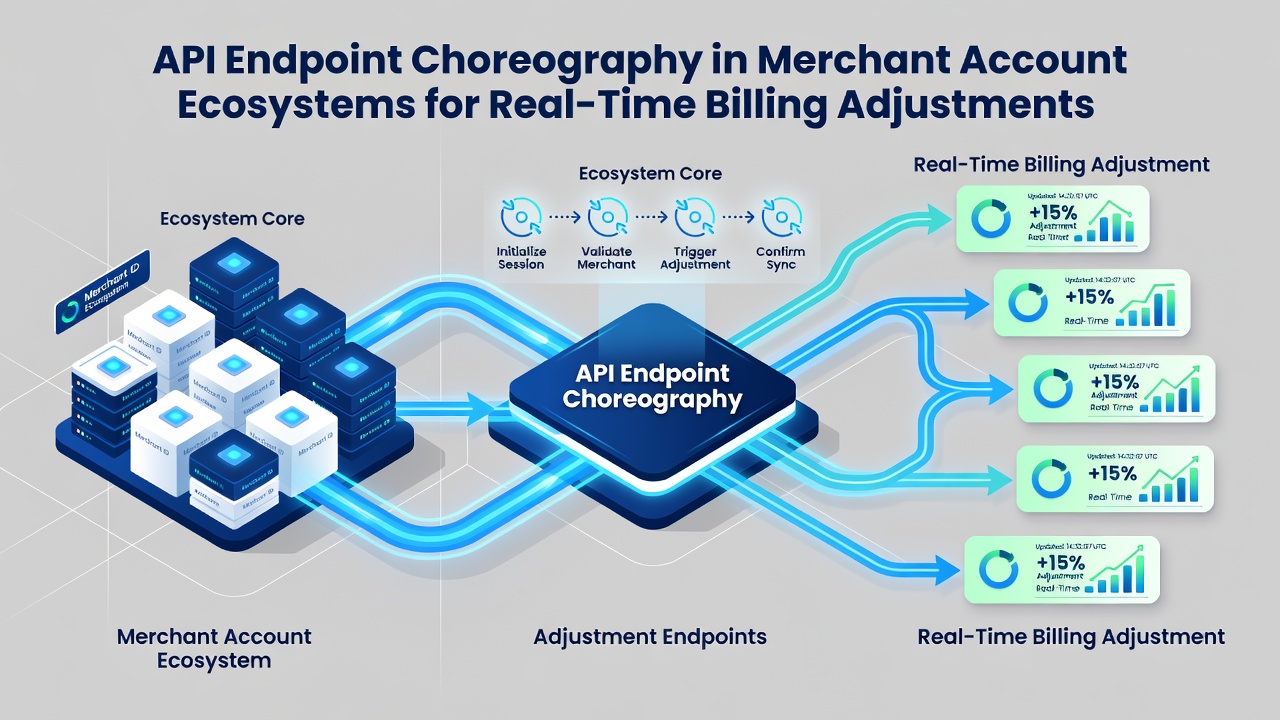
Endpoints handle tasks such as updating subscription tiers, applying prorated credits, and synchronizing tax calculations. Each endpoint emits events like “billing.adjusted” or “account.balance.updated,” and downstream services consume those events without waiting for sequential commands. The approach supports parallel processing while preserving audit trails required by regulators.
Real-Time Adjustments Across Merchant Accounts
Real-time billing adjustments require endpoints to validate changes against current account status, available credit lines, and regulatory thresholds before committing updates. In July 2026, several large processors reported that choreography patterns enabled same-second updates for recurring charges when customers upgraded or downgraded plans mid-cycle. This timing matters because merchants must reflect changes immediately to avoid over- or under-billing.
Endpoints typically interact with merchant account ledgers, fraud scoring services, and tax engines. When a customer requests an immediate downgrade, the billing endpoint publishes an event; the ledger endpoint adjusts the balance, the fraud service reevaluates risk, and the tax engine recalculates obligations. All actions complete through asynchronous messaging rather than blocking calls.
Technical Patterns Observed in Production Systems
Event schemas follow standards such as CloudEvents so that payloads remain consistent across different vendors. According to a 2025 study by the Federal Reserve Bank of Boston, standardized schemas reduced integration errors by 27 percent in environments that adopted choreography. Endpoints also implement idempotency keys to prevent duplicate adjustments when messages are retried.
Security relies on mutual TLS between services together with signed event payloads. Compliance teams require that every adjustment event carries a reference to the originating merchant request and the regulatory justification. Systems log these references so that audits can reconstruct the sequence without a central coordinator.
Integration with Existing Merchant Onboarding and Reconciliation Flows
Choreography extends into merchant onboarding because new accounts must immediately participate in event streams for billing adjustments. Onboarding sequences now include registration of each endpoint’s event subscriptions so that billing changes propagate correctly from day one. Reconciliation processes benefit because every adjustment event includes a unique identifier that matches corresponding entries in bank deposit reports.
One processor serving mid-sized retailers implemented choreography in early 2026 and recorded a 19 percent reduction in manual reconciliation tickets within six months. The improvement came from automatic propagation of billing corrections rather than nightly batch jobs.
Regulatory Considerations Across Regions
Regulators in multiple jurisdictions require traceability for any change that affects customer billing. The Australian Competition and Consumer Commission has issued guidance emphasizing that event-driven systems must retain immutable logs for at least seven years. Similar expectations appear in guidance from the European Central Bank on payment service resilience.
Merchants operating across borders must ensure that choreography respects data residency rules because events may traverse multiple jurisdictions. Endpoints therefore tag events with geographic metadata so that routing decisions comply with local statutes.
Conclusion
API endpoint choreography provides a distributed method for handling real-time billing adjustments inside merchant account ecosystems. The pattern relies on event publication and subscription rather than central direction, which supports scalability and fault tolerance. Production data from 2025 and 2026 indicates measurable improvements in uptime and reconciliation accuracy when organizations adopt this approach. Regulatory frameworks continue to shape implementation details, particularly around logging and data residency. As payment volumes grow, choreography offers a practical architecture for maintaining consistency across billing, ledger, and compliance services without introducing bottlenecks.