API Timing Ripples: Aligning Payment Confirmations with Stock Updates in Specialty Retail Chains
Tina Carter · Aug 14, 2026
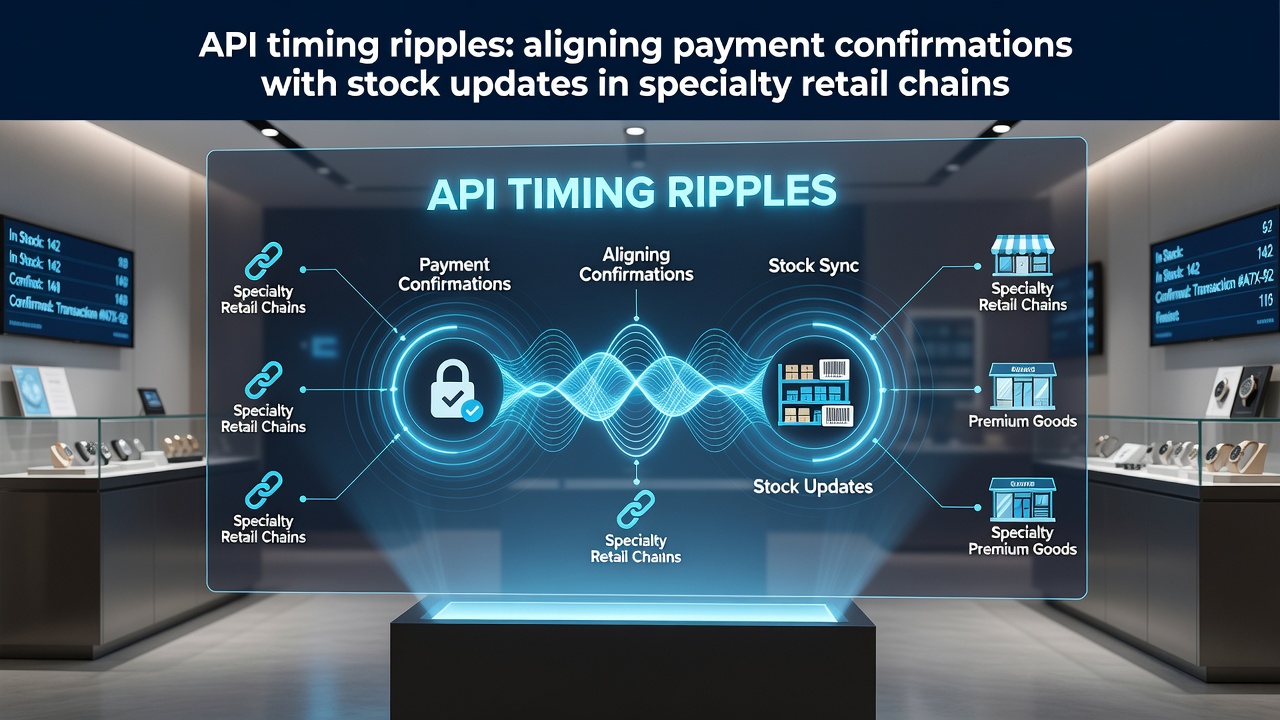
API Timing Ripples: Aligning Payment Confirmations with Stock Updates in Specialty Retail Chains
Specialty retail chains operate across multiple locations where payment confirmations must reach inventory systems without delay, yet network conditions and processing sequences often create timing ripples that shift stock levels out of sync. These ripples appear when a sale processes through a payment gateway, the confirmation travels via API to the central ledger, and the stock record updates several seconds or minutes later, allowing oversells or phantom inventory to appear during that window. Observers note that chains selling niche products such as outdoor gear, specialty foods, or limited-edition apparel face heightened exposure because each item carries higher per-unit value and lower turnover rates compared with mass-market goods.
How Payment and Inventory APIs Interact
Payment gateways transmit authorization responses through structured endpoints while inventory platforms listen for those same signals or poll at fixed intervals, and the mismatch between push and pull methods generates the core timing issue. When a customer completes a purchase at a point-of-sale terminal, the gateway returns a success code that triggers an immediate webhook to the enterprise resource planning system, yet the inventory service may still operate on a five-second refresh cycle, creating a brief period where the same SKU remains visible as available across other channels. Researchers at the National Retail Federation documented that 37 percent of specialty retailers reported at least one oversell incident per month traceable to API latency exceeding 800 milliseconds during peak hours in 2025, with similar patterns continuing into August 2026 as transaction volumes rose.
Specialty chains often layer additional verification steps for high-value items, and each added call extends the total elapsed time before stock decrements register. A single transaction might pass through fraud screening, address verification, and loyalty point calculation before the final confirmation reaches the warehouse management module, compounding the ripple across distributed locations.
Observed Patterns in Multi-Location Operations
Data from chains with five or more outlets shows that geographic separation between payment processors and regional inventory nodes amplifies timing discrepancies, particularly when stores operate in different time zones or connect through shared cloud regions. One study from the Retail Council of Canada tracked 12 specialty apparel retailers and found that cross-border shipments increased the average confirmation-to-update interval by 1.4 seconds compared with domestic-only flows, resulting in measurable stock discrepancies during high-demand product drops. Those discrepancies appear most frequently when mobile terminals at pop-up events or temporary locations feed into the same backend ledger used by flagship stores, because network hops multiply and packet routing varies.
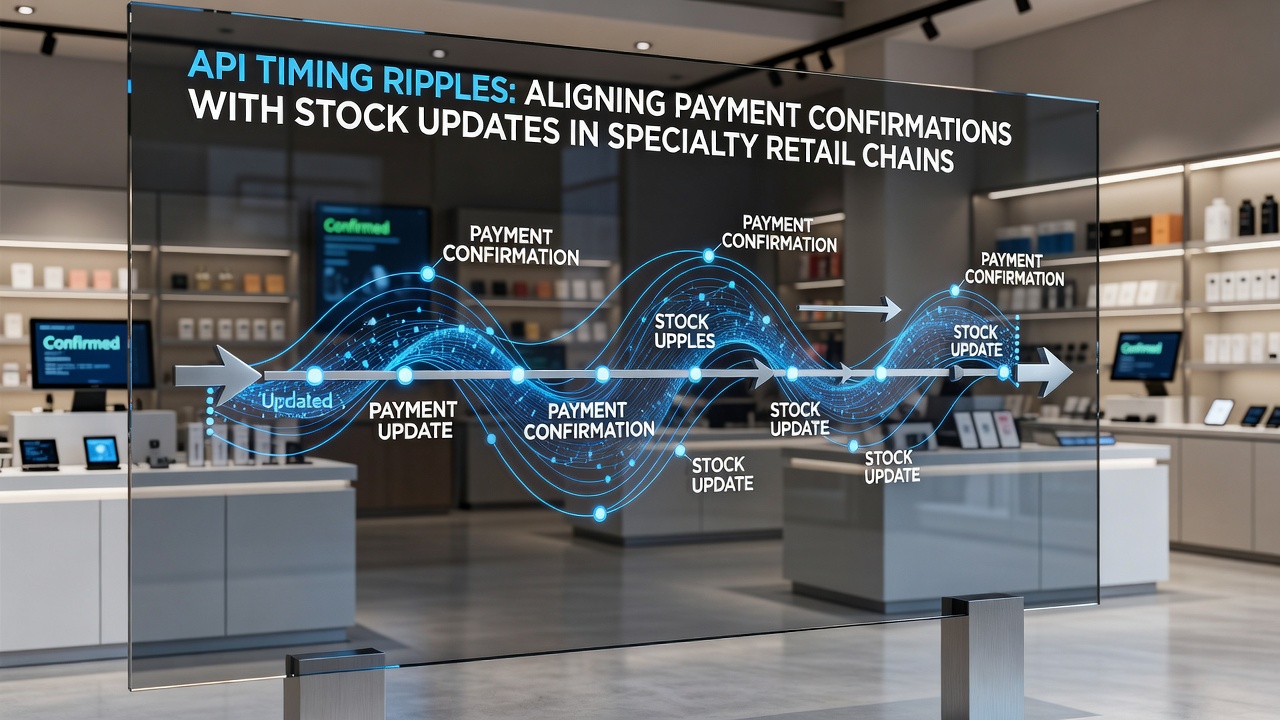
Specialty retailers who adopted event-driven architectures reduced the median interval to under 250 milliseconds in controlled tests, while those relying on scheduled batch jobs continued to experience intervals averaging 3.2 seconds. The difference manifests in daily stock accuracy reports where the event-driven group maintained 99.4 percent alignment between confirmed sales and updated units on hand, whereas the batch group recorded alignment at 96.8 percent.
Technical Approaches to Reducing Ripples
Developers implement idempotency keys and sequence numbers within API payloads so that duplicate or out-of-order messages do not trigger repeated stock adjustments, and these identifiers allow systems to reconstruct the correct sequence even when packets arrive late. Retail platforms also deploy message queues that buffer confirmations during brief outages, releasing them in timestamp order once connectivity restores, thereby preventing the stock record from advancing ahead of actual sales. According to figures released by the Australian Bureau of Statistics in their 2026 retail technology survey, chains that introduced queue-based reconciliation reported a 41 percent drop in inventory adjustment tickets submitted by store staff.
Another technique involves embedding expected stock delta values inside the payment confirmation response itself, allowing the inventory service to validate and apply the change without additional round trips. This approach shortens the exposure window but requires tight schema coordination between gateway providers and internal development teams, a coordination that specialty retailers have pursued through industry working groups since late 2025.
August 2026 Developments and Industry Data
By August 2026 several gateway providers had introduced optional real-time stock reservation flags that hold inventory units for a configurable window while payment processing completes, and early adopters among specialty food and beverage retailers reported fewer stockouts during weekend rushes. The same period saw increased adoption of standardized timing metrics published by the Payments Council of the European Union, which encouraged chains to log and report average confirmation-to-update intervals as part of operational transparency requirements. Those metrics revealed that chains processing fewer than 5,000 transactions daily still relied heavily on polling intervals of ten seconds or longer, leaving measurable gaps compared with larger operators who shifted to webhook-driven models.
Conclusion
API timing ripples between payment confirmations and stock updates continue to affect specialty retail chains through measurable discrepancies in inventory records, yet documented technical patterns such as webhooks, message queues, and embedded delta values demonstrate consistent pathways toward tighter alignment. Retail operators who track interval metrics and adjust refresh cycles accordingly maintain higher stock accuracy across locations, and industry data collected through August 2026 indicates ongoing refinement of these synchronization methods as transaction volumes and product specialization increase.