Decoding Encryption Protocols That Safeguard Data Flows in High-Volume Digital Commerce Ecosystems
Petra Becker · May 26, 2026
Decoding Encryption Protocols That Safeguard Data Flows in High-Volume Digital Commerce Ecosystems
High-volume digital commerce ecosystems process millions of transactions daily, and encryption protocols form the backbone that protects sensitive data as it moves between merchants, gateways, banks, and consumers. These systems rely on established standards that encrypt information both in transit adn at rest, which reduces exposure during peak shopping periods like holiday seasons or flash sales events.
Core Protocols Powering Secure Data Movement
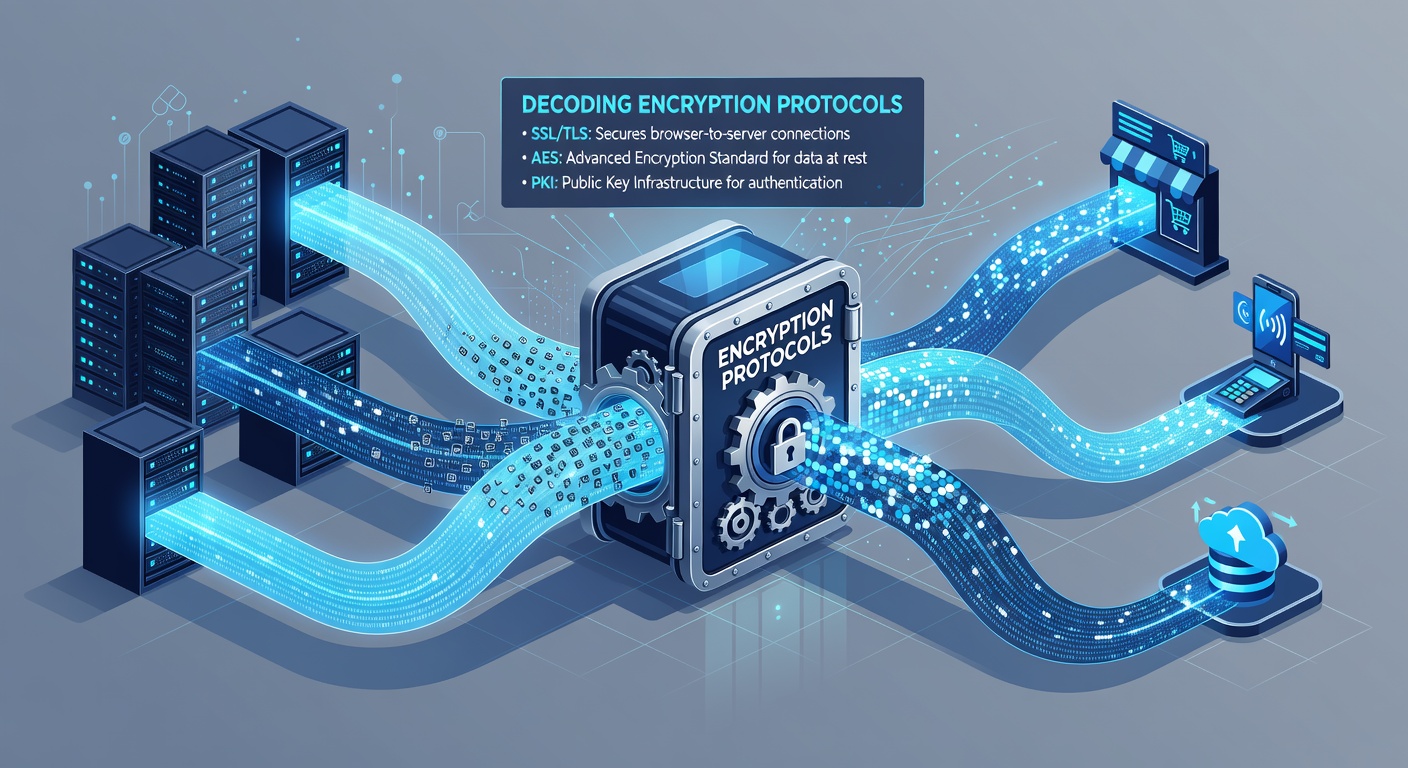
Transport Layer Security, known as TLS 1.3, serves as the primary protocol for securing communications between clients and servers in real time. It establishes encrypted channels that authenticate endpoints while preventing eavesdropping on card details or personal identifiers as packets travel across networks. Researchers at standards bodies have documented how TLS 1.3 reduces handshake times compared to earlier versions, which helps maintain performance when traffic spikes exceed 100,000 requests per minute.
Advanced Encryption Standard with 256-bit keys, or AES-256, handles data at rest inside databases and storage systems used by payment processors. This symmetric cipher encrypts stored transaction records so that even if physical servers face unauthorized access attempts, the underlying information remains unreadable without the corresponding keys. Studies from government agencies indicate AES-256 continues to resist brute-force attacks when implemented with proper key rotation schedules.
Integration with Payment Standards and Compliance Frameworks
Payment Card Industry Data Security Standard requirements mandate specific encryption practices for any organization handling cardholder data. Merchants operating at scale integrate these rules into their API flows, which means card numbers get tokenized before they reach internal ledgers. According to resources from the PCI Security Standards Council, tokenization replaces sensitive values with unique identifiers that hold no intrinsic value outside the payment environment.
Public key infrastructure supports the distribution of digital certificates that verify server identities during TLS sessions. Certificate authorities issue these credentials after rigorous validation processes, and high-volume platforms automate renewal to avoid service interruptions. Data from the National Institute of Standards and Technology shows that proper PKI management correlates with fewer certificate-related outages in large-scale deployments.
Handling Scale and Real-Time Requirements
High-volume platforms often deploy hardware security modules to manage cryptographic keys under heavy load. These dedicated appliances perform encryption and decryption operations at speeds that software alone cannot match, which keeps checkout processes responsive even when concurrent users reach tens of thousands. Observers note that HSM clusters allow operators to scale capacity horizontally without exposing keys to general-purpose servers.
End-to-end encryption extends protection beyond the initial merchant gateway, which ensures data stays encrypted until it reaches the acquiring bank. This approach limits the number of systems that ever see plaintext information, and several large processors adopted expanded E2EE configurations ahead of updated guidance issued in early 2026. European Union Agency for Cybersecurity reports highlight how such layered methods align with broader data protection regulations across member states.
Evolving Threats and Protocol Updates
Quantum computing developments continue to prompt examination of current public-key algorithms like RSA and elliptic curve cryptography. Standards organizations have outlined migration paths toward post-quantum cryptography that could replace vulnerable methods within the next decade, and testing programs began expanding in May 2026 to evaluate performance impacts on high-throughput transaction systems. Those monitoring these shifts report that hybrid implementations combining classical and quantum-resistant algorithms are under active evaluation.
Regular audits verify that encryption configurations match the latest threat models, which includes checking cipher suite priorities and key lengths across all connected services. Automated scanning tools flag outdated protocols such as TLS 1.0 or 1.1, prompting immediate upgrades before they become entry points for interception attempts.
Conclusion
Encryption protocols operate as interconnected layers that collectively shield data flows across high-volume commerce environments. From TLS handshakes securing live sessions to AES routines protecting stored records, each component addresses distinct risks while supporting the speed and reliability merchants require. Continued updates to standards and infrastructure keep these protections aligned with emerging computational capabilities and regulatory expectations.