How Behavioral Signals Shape Approval Rates for Recurring Charges in Subscription Platforms
Felix Schmid · May 15, 2026
How Behavioral Signals Shape Approval Rates for Recurring Charges in Subscription Platforms
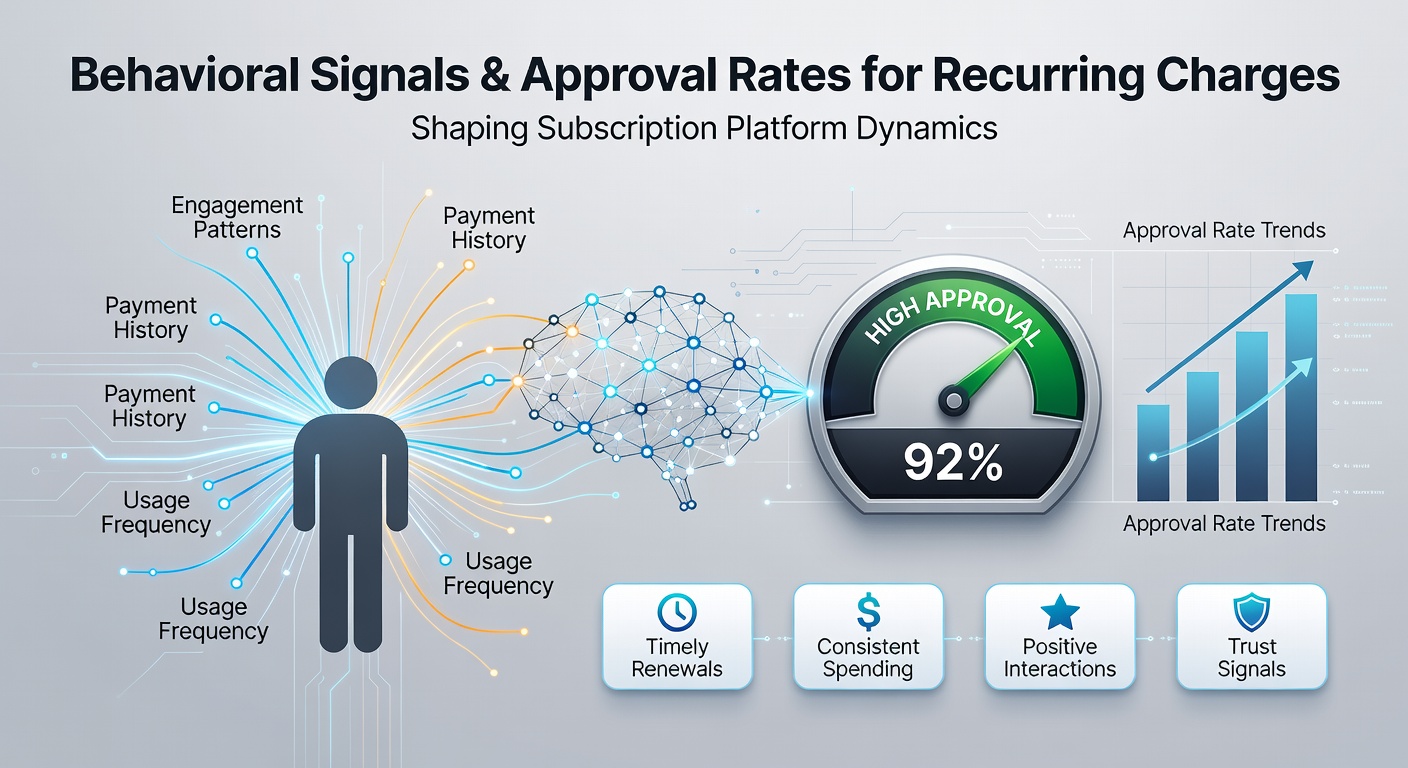
Subscription platforms process millions of recurring charges each month, and issuers evaluate far more than card details alone when deciding approvals. Behavioral signals such as login consistency, device fingerprints, session durations, and engagement patterns feed directly into risk models that determine whether a renewal clears or declines. Those signals help issuers distinguish legitimate customer activity from potential fraud, which in turn affects overall approval rates across SaaS services, streaming platforms, and membership sites alike.
Key Behavioral Signals in Recurring Payment Flows
Payment processors collect data points that extend well beyond the transaction itself, including IP address stability across billing cycles, time-of-day patterns for account access, and even cursor movement or typing rhythms captured during checkout flows. When a subscriber maintains the same device profile and logs in at predictable intervals, risk scores typically drop, raising the likelihood of approval on the next charge. Conversely, sudden shifts such as a new browser, overseas IP, or abrupt drop in platform usage trigger higher scrutiny because those changes often correlate with account takeover attempts or card testing schemes.
Device and Location Consistency Metrics
Researchers tracking subscription data note that platforms using device fingerprinting see measurable lifts in recurring approval rates, especially when fingerprints match historical records within a narrow tolerance window. Location signals add another layer, since subscribers who bill from the same city or region month after month present lower risk profiles than those whose geolocation jumps without explanation. As of May 2026, several major gateways report that incorporating multi-factor location verification alongside device data has reduced false declines on legitimate recurring charges by noticeable margins in markets across North America and the Asia-Pacific region.
How Issuers Incorporate Signals into Approval Decisions
Issuers run machine learning models that weigh behavioral inputs against historical fraud patterns before authorizing recurring transactions. A subscriber who streams content daily and accesses the service from the expected device receives a favorable score, while one whose account shows prolonged inactivity followed by a late-night login from a new location may face a soft decline even if the card details remain valid. These models update continuously, drawing on aggregated transaction data from millions of recurring events to refine thresholds and reduce unnecessary blocks.
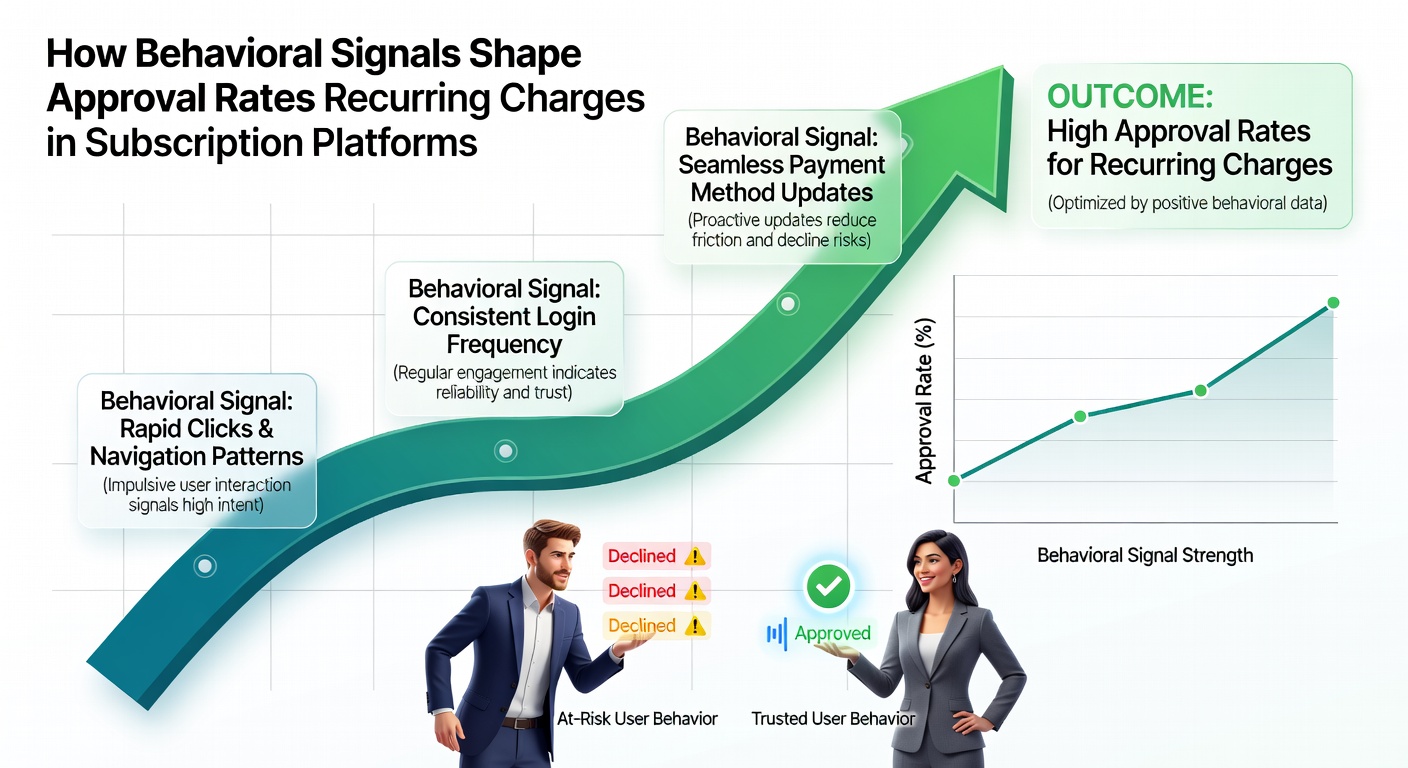
Subscription businesses that share additional engagement metrics with their payment partners often experience smoother renewals because the extra context helps issuers calibrate risk more precisely. For instance, a fitness app that reports workout frequency alongside billing requests gives issuers a proxy for ongoing customer intent, which can offset minor behavioral anomalies and keep approval rates stable. Data from industry reports show that such enriched signals correlate with fewer interruptions in revenue streams for platforms that implement them systematically.
Regional Variations and Regulatory Influences
Approval patterns differ by region because local regulations and issuer practices shape how behavioral data gets applied. In Canada, guidance from the Bank of Canada encourages transparent use of consumer data in payment decisions, prompting platforms to disclose how engagement signals influence recurring authorizations. Meanwhile, academic studies from institutions in Australia highlight that consistent behavioral baselines help issuers maintain high approval rates even as overall fraud volumes fluctuate. Those findings underscore the value of maintaining steady user interaction patterns rather than relying solely on static card information.
Impact on Merchant Revenue and Customer Retention
When recurring charges decline due to mismatched behavioral signals, merchants lose immediate revenue and risk customer churn if subscribers must update payment details repeatedly. Platforms that monitor these signals internally and adjust billing timing or add gentle re-engagement prompts before charge dates often see smoother cash flow. Observers tracking subscription metrics in 2026 note that services with proactive behavioral monitoring maintain steadier approval percentages compared with those that treat each renewal as an isolated transaction event.
Practical Implementation Examples
One streaming service adjusted its risk thresholds after analyzing login and viewing data, allowing charges to proceed when users maintained at least three sessions per week even if minor device variations appeared. The change produced higher renewal success without increasing chargeback exposure. Another SaaS provider integrated session duration metrics into its gateway configuration, resulting in fewer blocks on accounts that showed regular but brief logins rather than prolonged inactivity followed by sudden activity spikes. These adjustments demonstrate how granular behavioral inputs translate into operational improvements for recurring billing systems.
Conclusion
Behavioral signals continue to play a central role in shaping approval rates for recurring charges because they supply context that static card data cannot provide. Subscription platforms that align their data-sharing practices with issuer risk models reduce false declines while maintaining security standards. As payment ecosystems evolve through 2026 and beyond, the integration of engagement patterns, device consistency, and location stability will remain essential for sustaining reliable revenue collection across recurring billing environments.