How Pricing Structures Shape Fraud Detection Deployment in Merchant Account Setups
Petra Becker · Jul 26, 2026
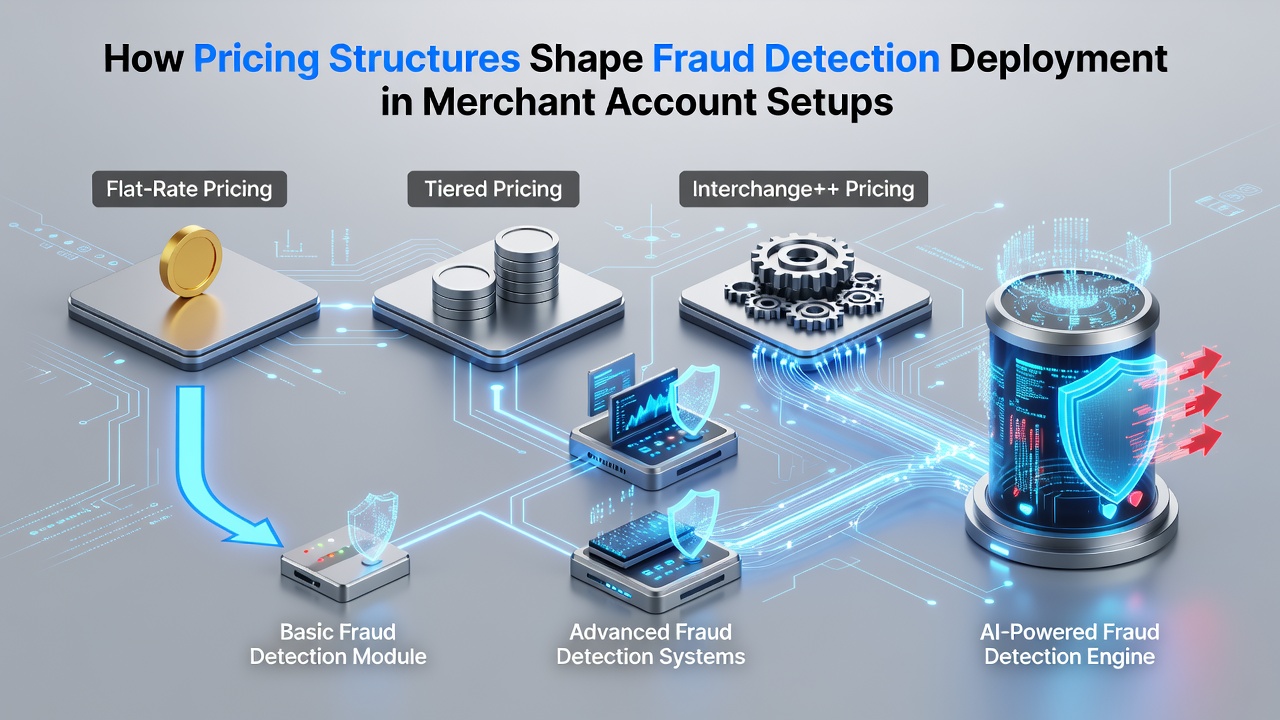
How Pricing Structures Shape Fraud Detection Deployment in Merchant Account Setups
Payment pricing models determine how much capital merchants allocate toward fraud detection systems during account setup, and those choices create ripple effects across authorization rates and chargeback management. Flat-rate structures often bundle basic screening tools at a predictable cost while interchange-plus arrangements pass through network fees separately and leave room for merchants to layer on advanced analytics as separate line items.
Core Pricing Models in Merchant Accounts
Interchange-plus pricing breaks out the card network fees from the processor markup so merchants see exact costs and can redirect savings into optional fraud modules. Tiered pricing groups transactions into qualified, mid-qualified, and non-qualified buckets where higher-risk categories carry elevated rates that sometimes include bundled verification steps. Subscription-based models charge a monthly platform fee plus per-transaction costs and frequently embed fraud scoring engines at no extra per-use charge, which changes deployment timelines for smaller operations.
How Costs Influence Tool Selection
Merchants operating under tiered plans face incentives to minimize non-qualified transactions because those carry steeper fees, yet the same structure can limit budget for real-time behavioral analysis tools that reduce false declines. Data compiled by the Federal Reserve Bank of Chicago shows that businesses paying interchange-plus rates deployed machine-learning fraud layers at roughly twice the rate of those locked into flat-rate agreements during the first half of 2026. The difference appears because interchange-plus transparency lets operators calculate return on investment for each added detection rule before committing funds.
Deployment Patterns Across Business Sizes
Smaller merchants often begin with the fraud controls included in their base pricing package and later upgrade when transaction volume justifies the expense. Larger retailers negotiate custom pricing that itemizes fraud services separately, allowing them to activate velocity checks, device fingerprinting, and proxy detection on day one of account activation. Research from the Bank of Canada indicates that mid-sized e-commerce firms using subscription pricing completed full fraud system rollouts an average of three weeks faster than peers on tiered plans in the same sector.
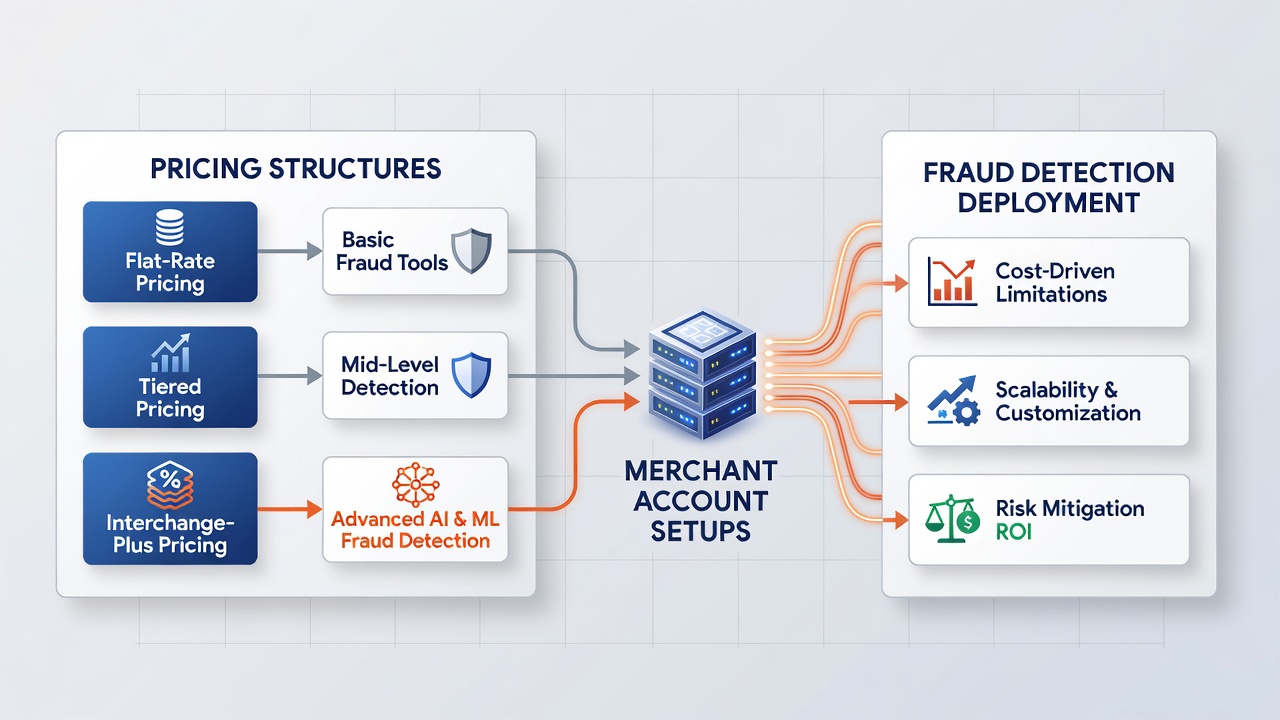
July 2026 figures from the European Central Bank highlight that merchants who adopted interchange-plus models increased spend on third-party fraud services by 18 percent year-over-year, while those remaining on flat-rate contracts showed only single-digit growth in the same category. The pattern holds because interchange-plus statements make incremental fraud tool costs visible and therefore easier to justify internally.
Integration Timelines and Risk Thresholds
Account approval workflows interact directly with pricing because processors offering subscription bundles often pre-configure basic rules during onboarding, whereas interchange-plus providers require separate configuration calls to activate advanced modules. Those who study these sequences note that merchants who delay fraud tool activation until after the first billing cycle experience higher initial chargeback ratios, regardless of the underlying pricing model. Observers note that subscription pricing reduces friction for testing new detection parameters because the monthly fee already covers usage spikes during promotional periods.
Regional Variations in 2026
North American processors increasingly offer hybrid pricing that combines elements of interchange-plus and subscription models, giving merchants flexibility to scale fraud detection without renegotiating the entire agreement. Australian payment regulators reported in mid-2026 that businesses using these hybrids activated address verification and 3D Secure at higher rates than those on pure tiered structures. The flexibility stems from clearer cost separation that lets operators tie specific fraud features to measurable reductions in declined transactions.
Conclusion
Pricing structures continue to steer which fraud detection capabilities merchants activate and when they bring those tools online. Interchange-plus arrangements tend to support granular investments in advanced analytics, subscription models accelerate initial deployment through bundled services, and tiered plans create trade-offs that sometimes defer sophisticated screening until volumes justify the added expense. Data from multiple regulatory and research bodies confirms these linkages persist across merchant sizes and geographic markets as of July 2026.