How Settlement Cycles in Merchant Accounts Shape Inventory Planning for Seasonal Online Sellers
Petra Becker · Jul 31, 2026
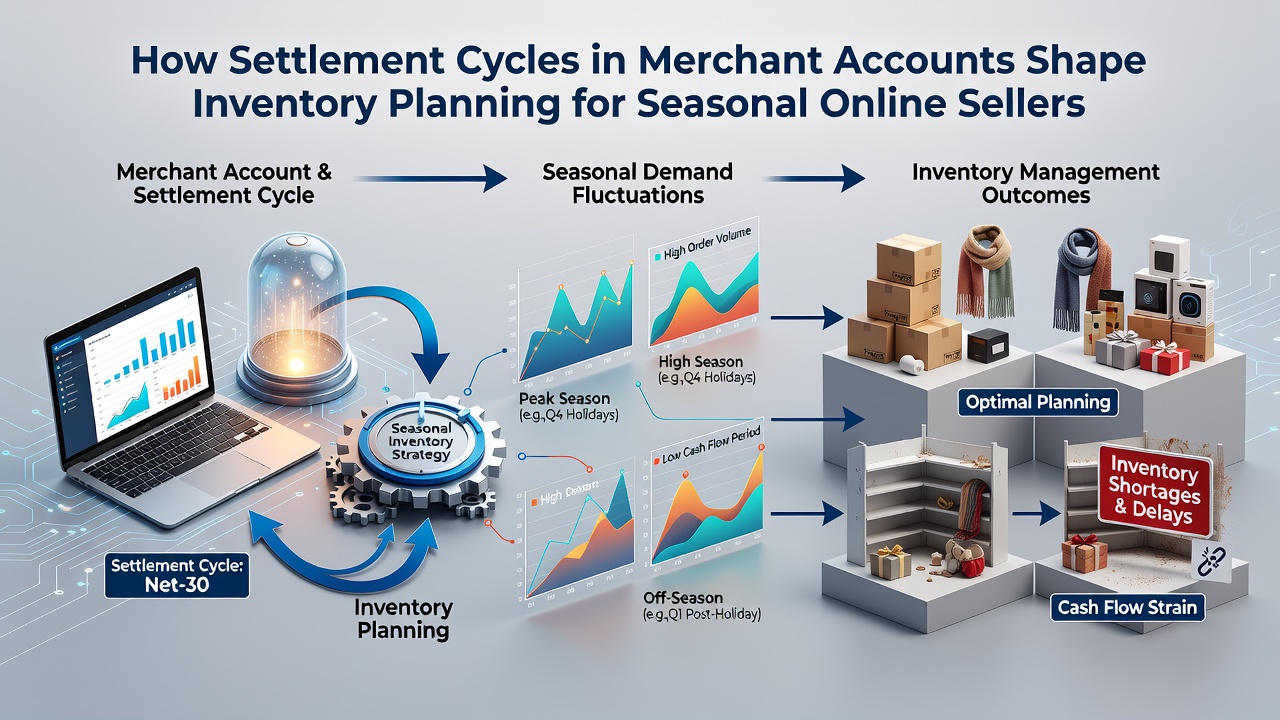
How Settlement Cycles in Merchant Accounts Shape Inventory Planning for Seasonal Online Sellers
Settlement cycles determine when funds from credit card transactions reach merchant accounts, and this timing directly influences how seasonal online sellers order stock ahead of peak demand periods. Most processors release funds within two to three business days after authorization, yet variations arise from card network rules, merchant risk profiles, and volume thresholds that extend those windows for some sellers. Seasonal businesses selling holiday decor, summer apparel, or back-to-school supplies must align purchase orders with these deposit schedules to avoid stockouts or excess carrying costs.
Understanding Settlement Timelines in Practice
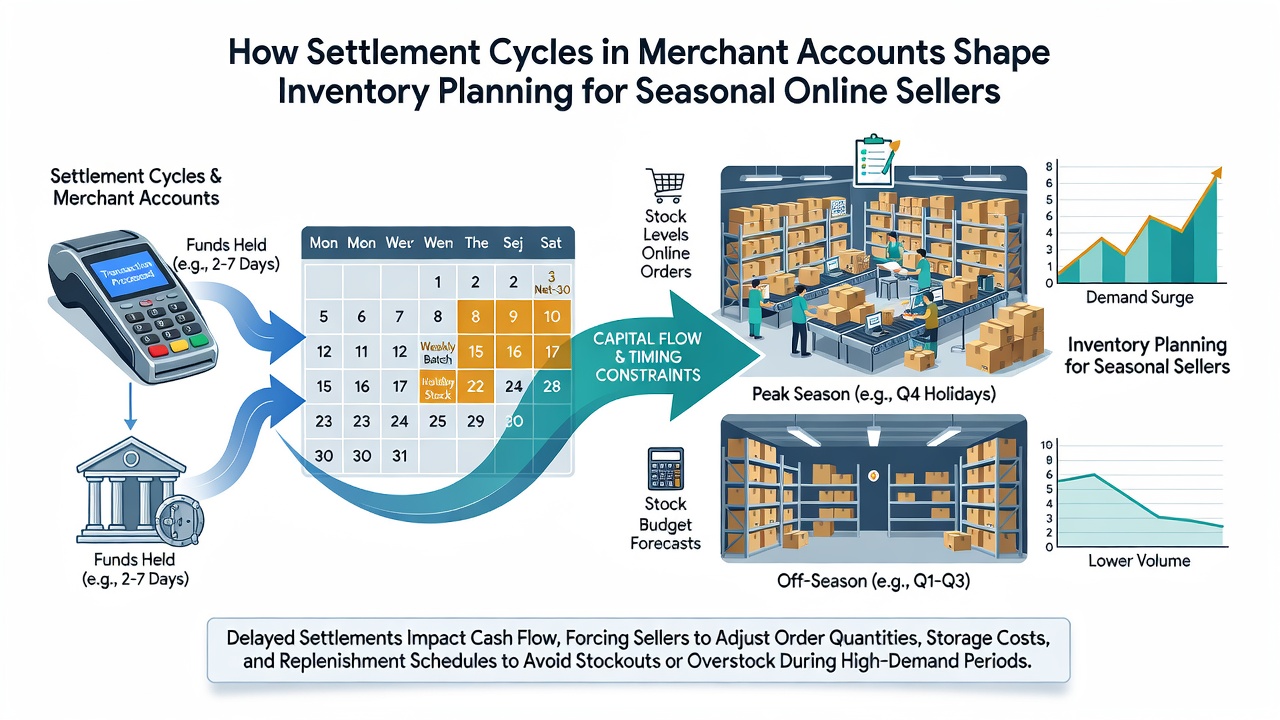
Payment processors batch transactions daily and submit them to card networks, which then move money through acquiring banks before deposits appear in merchant accounts. Standard cycles run two to three days for most Visa and Mastercard volumes, while American Express and Discover can stretch to four days depending on the agreement in place. High-volume seasonal sellers sometimes negotiate faster schedules, yet new or elevated-risk accounts face reserves that hold back portions of each batch for seven to thirty days. These holds protect processors from chargebacks that spike during return-heavy seasons such as January after the holidays.
Cash Flow Pressure on Inventory Decisions
When deposits lag behind sales, sellers cannot immediately reinvest revenue into the next round of wholesale purchases. A merchant expecting $150,000 in December revenue may receive only 60 percent of that amount by mid-January, forcing reliance on lines of credit or delayed ordering that risks missing early spring demand. Data from the Federal Reserve's 2025 payments study shows average settlement times lengthened slightly for e-commerce accounts classified as seasonal, moving from 2.1 days in 2023 to 2.4 days in early 2026. Sellers who plan purchases around confirmed deposit dates maintain steadier supplier relationships and avoid rush shipping fees that erode margins.
Planning Around Deposit Predictability
Seasonal sellers increasingly map expected settlement dates onto their inventory calendars twelve months ahead. Software that pulls batch reports and forecasts net deposits after fees helps teams place orders at the right moment. One apparel retailer that shifted from weekly to bi-weekly settlement by switching processors gained three extra days of float each month, allowing earlier payment to overseas factories and locking in lower unit costs before tariffs adjusted in July 2026. Another business selling outdoor gear discovered that same-day funding options, though carrying higher per-transaction fees, reduced stockout incidents by 18 percent during the summer rush because cash arrived before supplier payment terms expired.
Reserve Requirements and Their Ripple Effects
Processors apply rolling reserves when monthly chargeback ratios exceed thresholds set by card networks. A 5 percent reserve on a $200,000 monthly volume keeps $10,000 unavailable for inventory replenishment, an amount that compounds across multiple months for sellers with long lead times. Research published by the European Payments Council in 2025 noted that seasonal merchants in the apparel and gift categories experienced reserve releases averaging 22 days after the close of their peak quarter, a delay that forced many to use alternative financing. Sellers who maintain separate operating accounts for non-peak periods can isolate reserve impacts and keep core inventory pipelines funded through slower months.
Coordination With Suppliers and Payment Terms
Suppliers often extend net-30 or net-45 terms to established seasonal accounts, yet these windows only work when settlement deposits arrive on schedule. Sellers who receive funds on day three can pay suppliers on day 25 without incurring late fees, preserving credit lines for unexpected demand spikes. Those facing five-day cycles must either negotiate longer supplier terms or carry larger cash buffers. Industry reports from the Retail Council of Canada indicate that merchants who synchronized settlement tracking with supplier portals reduced expedited freight spend by 12 percent during the 2025 holiday cycle compared with the prior year.
Technology Tools That Bridge Timing Gaps
Inventory platforms now integrate directly with merchant account dashboards to display projected deposit dates alongside open purchase orders. Automated alerts flag when expected funds fall short of planned outlays, prompting earlier use of credit facilities or scaled-back orders. Mid-2026 updates from several processors added API endpoints that push real-time batch status into these systems, cutting manual reconciliation time for seasonal teams by an average of four hours per week. Sellers using these connections report fewer instances of over-ordering because they base decisions on verified rather than estimated cash positions.
Conclusion
Settlement cycles remain a fixed constraint that seasonal online sellers must factor into every inventory forecast. Accurate mapping of deposit timing against supplier deadlines and demand curves keeps stock levels aligned with actual cash availability. Processors continue to refine batch schedules and reserve structures, yet the core relationship between when revenue arrives and when new inventory can be purchased stays central to operational stability for businesses whose sales concentrate in narrow windows each year.