Ledger Harmony in Ephemeral Retail: Matching Authorization Trails to Deposit Records for Short-Term Sellers
Tina Carter · Aug 21, 2026
Ledger Harmony in Ephemeral Retail: Matching Authorization Trails to Deposit Records for Short-Term Sellers
Ephemeral retail setups such as pop-up shops and seasonal stalls generate rapid transaction volumes that require precise alignment between authorization trails and eventual bank deposits. Short-term sellers rely on these matches to confirm that every approved charge reaches their accounts without discrepancies. Data from payment networks shows that mismatches often stem from timing gaps between card networks and acquiring banks. Observers note that August 2026 brought increased activity in temporary retail as vendors prepared for back-to-school events and summer festivals. Those patterns highlighted how authorization codes must connect directly to deposit batches for accurate cash flow tracking.
Authorization Trails in Temporary Sales Environments
Authorization trails consist of unique reference numbers generated at the moment a card payment receives approval. Short-term sellers capture these identifiers through mobile terminals or handheld devices that transmit details to processors within seconds. Researchers have documented that these trails include merchant identifiers, transaction amounts, and timestamps that later serve as anchors during reconciliation. When deposits arrive one or two business days later, finance teams compare each trail entry against incoming funds to verify completeness. Experts have observed that high-volume pop-up events in urban markets produce hundreds of such trails daily, making systematic matching essential for operational continuity.
Connecting Trails to Deposit Records
Deposit records arrive from acquiring banks as batch files that list settled amounts alongside original authorization references. Short-term sellers match these entries by cross-referencing the authorization codes against their point-of-sale logs. Studies indicate that automated reconciliation tools reduce manual review time by aligning data fields such as amount, date, and merchant ID. In cases where partial settlements occur, vendors must trace the remaining balance to subsequent deposit cycles. Those who've studied these flows know that discrepancies frequently arise from currency conversions or network fees that subtract small percentages before funds reach the account. Payment processors supply detailed reports that include both authorization and settlement data to support this matching process.
Common Reconciliation Patterns Observed in 2026
Analysis of transaction data throughout August 2026 revealed recurring patterns among short-term vendors operating across multiple locations. Many sellers experienced deposit delays when events spanned weekends and holidays because banks processed batches on business days only. According to figures from the Federal Reserve payments research, temporary retail operations accounted for a measurable share of weekend authorizations that settled midweek. Vendors addressed these timing shifts by maintaining daily authorization exports that they compared against weekly deposit summaries. This approach allowed teams to isolate and resolve unmatched entries before they accumulated across reporting periods.
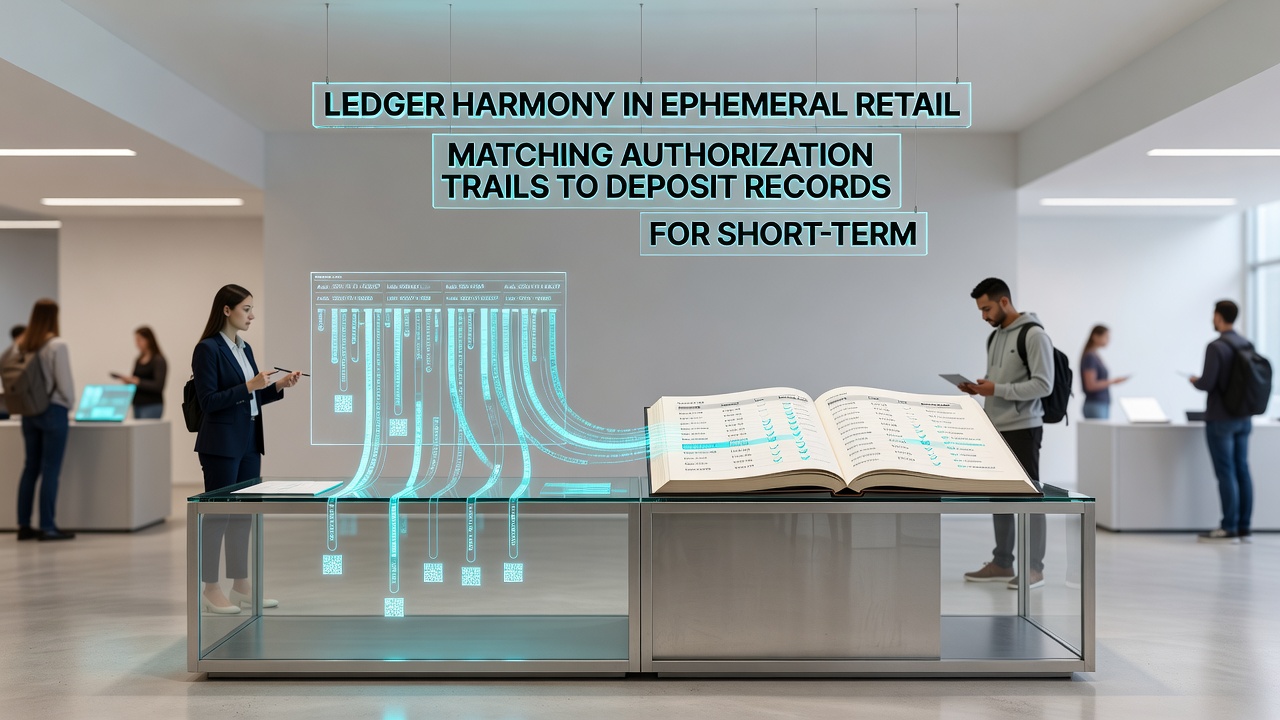
Additional patterns showed that multi-location sellers benefited from centralized ledger systems that aggregated trails from every terminal into a single view. These systems flagged unmatched authorizations automatically and generated alerts for manual investigation. Data indicates that such alerts helped vendors recover funds tied to declined settlements or processor holds. Observers note that integration between mobile terminals adn cloud-based accounting platforms became more common as short-term retail expanded into new markets during 2026.
Technical Approaches to Record Matching
Software platforms designed for ephemeral retail import authorization files directly from payment gateways and compare them against bank statements using rule-based algorithms. These algorithms check for exact matches on amount and reference number while allowing for minor fee adjustments. When exact matches fail, the systems present side-by-side views that let operators identify root causes such as split payments or partial refunds. Research from the Reserve Bank of Australia on retail payment infrastructure highlights how standardized file formats improve the speed of these comparisons across different acquiring banks. Short-term sellers who adopt these formats report fewer reconciliation errors during high-activity periods.
Some vendors supplement automated tools with periodic manual audits that review a sample of transactions for accuracy. This practice catches edge cases where network outages interrupted data transmission between the terminal and the processor. Those who've implemented combined automated and manual workflows find that the process stabilizes cash flow reporting even when deposit timing varies by location or bank.
Conclusion
Matching authorization trails to deposit records remains a core requirement for short-term sellers who operate in ephemeral retail settings. The process relies on consistent reference data, timely file imports, and systematic comparison routines that account for processing delays. Evidence from 2026 demonstrates that vendors who maintain organized authorization logs and leverage standardized reconciliation tools achieve clearer visibility into their settlement activity. As temporary retail continues to evolve, the ability to align these records directly influences how accurately sellers track incoming funds across multiple events and locations.