Mapping Data Flow Efficiencies in Multi-Vendor Payment Ecosystems During Flash Sales Events
Logan Frank · Aug 4, 2026
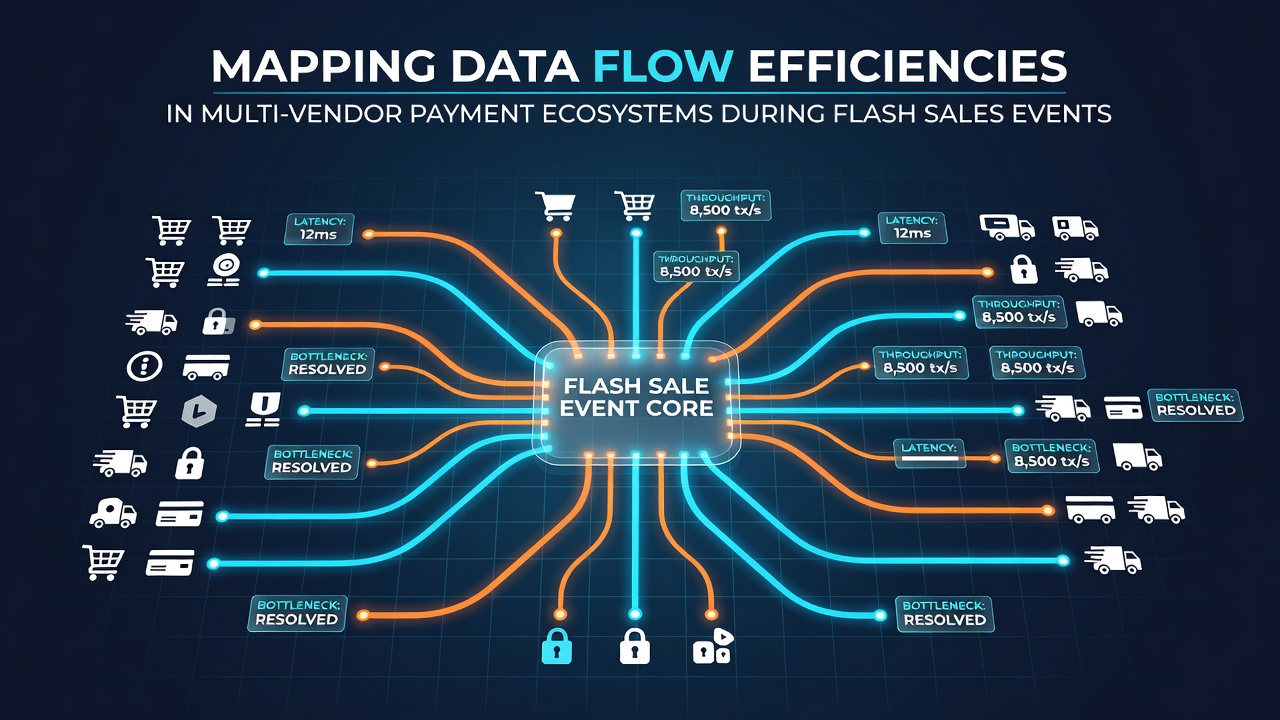
Mapping Data Flow Efficiencies in Multi-Vendor Payment Ecosystems During Flash Sales Events
Multi-vendor payment ecosystems handle transactions across numerous independent sellers through centralized platforms, and flash sales events intensify the volume and complexity of these interactions. Data flows must move rapidly between merchant accounts, processors, fraud detection layers, and banking networks while maintaining accuracy under peak loads. Researchers at institutions studying retail technology have documented how synchronization points determine whether systems maintain throughput or encounter bottlenecks during sudden demand spikes.
Core Components of Data Movement in These Systems
Payment requests originate from customer devices and route through API endpoints that connect storefronts to multiple vendors simultaneously. Each transaction carries metadata including vendor identifiers, product SKUs, tax calculations, and shipping rules, all of which require validation before authorization requests reach card networks. Observers note that mapping these pathways reveals redundant calls or missing handoffs that slow processing when thousands of orders arrive within minutes. Studies from payment infrastructure analyses show that platforms using unified orchestration layers reduce latency by consolidating queries across vendors rather than issuing separate requests for each participant.
Pressures Unique to Flash Sales
Flash sales create concentrated surges where traffic can increase tenfold within the first hour, according to retail operations reports covering major marketplaces. Multiple vendors compete for the same customer attention, which means inventory updates, price adjustments, and payment captures must occur in near real time to avoid overselling or declined authorizations. Data mapping exercises identify where merchant onboarding sequences or billing customization rules introduce delays, particularly when vendors operate on different ledger systems. Evidence from transaction monitoring indicates that reconciliation between sales records and bank deposits becomes harder when high-velocity events overlap with batch settlement windows.
Techniques for Tracing and Optimizing Flows
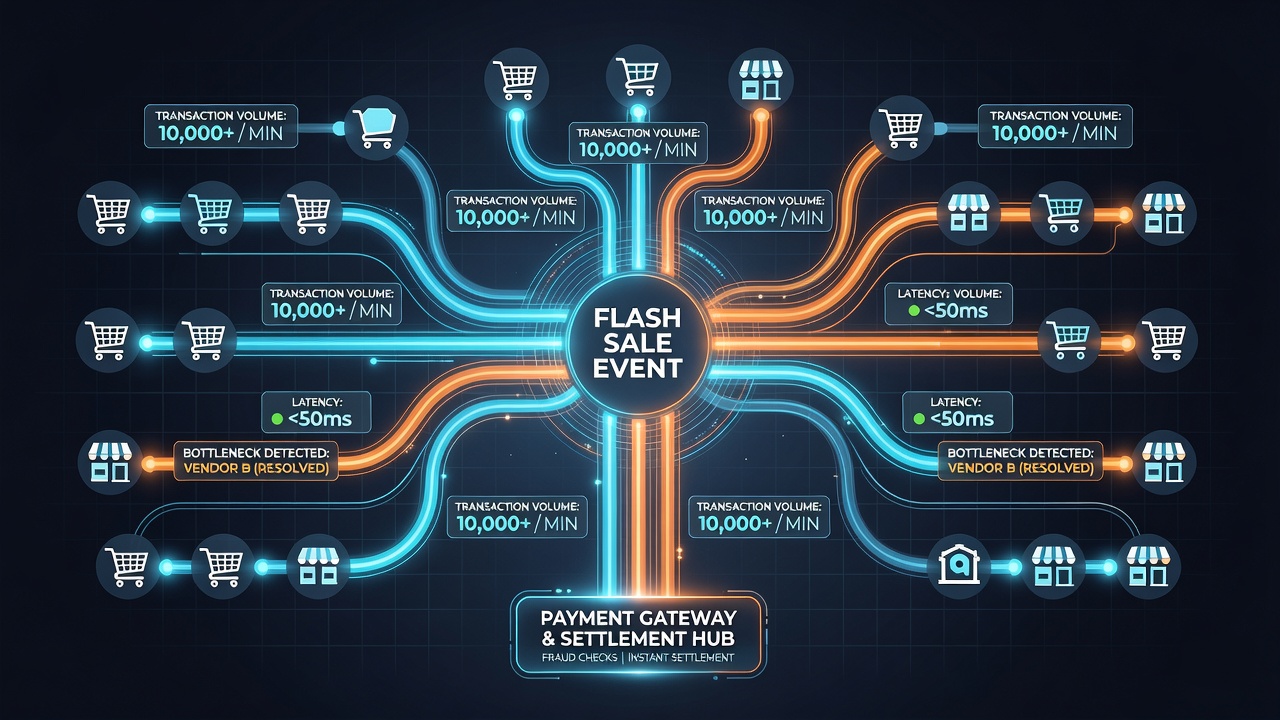
Engineers apply graph-based models to visualize authorization pathways, token exchanges, and settlement instructions across the ecosystem. These models highlight junctions where encryption protocols add processing overhead or where mobile terminal syncs with backend ledgers create matching discrepancies. Platforms that implement event-driven architectures allow components to react to partial data rather than waiting for complete payloads, which shortens overall cycle times. Data collected during August 2026 flash sale periods demonstrated measurable improvements in approval rates when vendors aligned their verification layers with the central gateway's timing requirements.
Role of Synchronization and Reconciliation Patterns
Independent retailers participating in multi-vendor events often align automated invoicing workflows with layered verification steps to stabilize cash flow. Mapping reveals patterns where temporary retail setups using mobile terminals experience higher mismatch rates unless real-time ledger updates occur. Research indicates that platforms employing continuous reconciliation routines catch discrepancies before they reach deposit stages, reducing manual intervention. Those who have examined artisan online marketplaces report that matching sales records against processor reports requires consistent timestamp standards across all vendors to prevent settlement disputes.
Emerging Patterns Observed in 2026 Operations
During August 2026 events, several large marketplaces tested dynamic routing that directed transactions to the least congested processor based on live load data. This approach built on earlier findings about authorization success factors in credit card networks and extended them to subscription-adjacent flash promotions. Reports from industry monitoring groups show that vendors adopting these routing maps experienced fewer declines linked to timeout issues, while maintaining compliance with encryption standards across data exchanges. External analyses continue to track how these adjustments influence processing outcomes for seasonal retailers operating within broader ecosystems.
One documented case involved a platform connecting over 200 vendors that mapped every data hop from cart submission to final capture. The resulting diagram exposed three redundant API calls that previously occurred during inventory checks, and their removal shortened average transaction time without altering security layers. Similar exercises at other sites have focused on token vault mechanics to reduce exposure during recurring or high-volume flows.
Conclusion
Effective mapping of data flows in multi-vendor payment ecosystems provides the visibility needed to maintain performance when flash sales generate extreme transaction volumes. Platforms that identify synchronization challenges and streamline authorization pathways support higher throughput while preserving accuracy in reconciliation and settlement processes. Continued examination of these patterns supplies retailers and processors with concrete adjustments that scale across different business sizes and event intensities.