Mapping Settlement Timelines Across Multi-Channel Retail Setups Using Layered Account Structures
Petra Becker · Jun 26, 2026
Mapping Settlement Timelines Across Multi-Channel Retail Setups Using Layered Account Structures
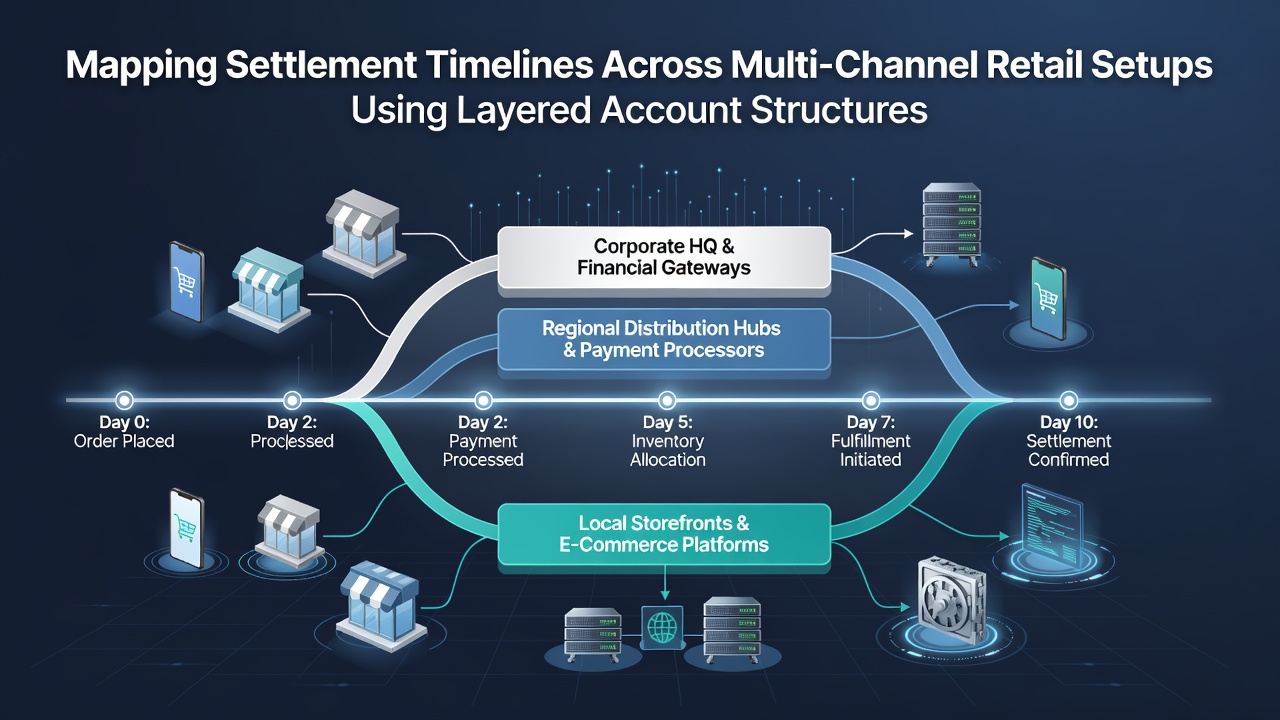
Retail operations spanning e-commerce platforms, physical outlets, and mobile applications generate transaction streams that settle at different intervals, and layered account structures provide a framework for tracking these timelines without mixing funds from separate channels. Merchants maintain a master account that oversees multiple sub-accounts, each tied to a specific sales channel, which allows reconciliation teams to isolate deposit patterns and predict cash availability more precisely. Payment processors record authorizations separately for each sub-account before batching settlements, so timelines depend on processor cutoffs, card network rules, and bank processing windows that vary by region.
Core Components of Layered Account Structures
Layered setups typically consist of a primary merchant account connected to secondary ledgers for each channel, with automated rules routing funds based on transaction origin codes. Sub-accounts receive unique identifiers that processors use to tag incoming authorizations, enabling daily reports to break down expected settlement dates by channel rather than presenting a single aggregated total. Observers note that this separation reduces errors when retailers compare sales records against bank statements, because each layer aligns with its own settlement cycle. Data from payment networks shows that multi-channel merchants using layered structures report fewer mismatches during month-end closes compared to those relying on flat account models.
Processors apply settlement rules at the sub-account level, which means an online order processed through one layer may fund two business days later while an in-store transaction in another layer settles the next morning. Account hierarchies also support internal transfers between layers when promotions or returns cross channels, and these movements carry their own posting timestamps that reconciliation software captures automatically.
Tracking Timelines by Channel Type
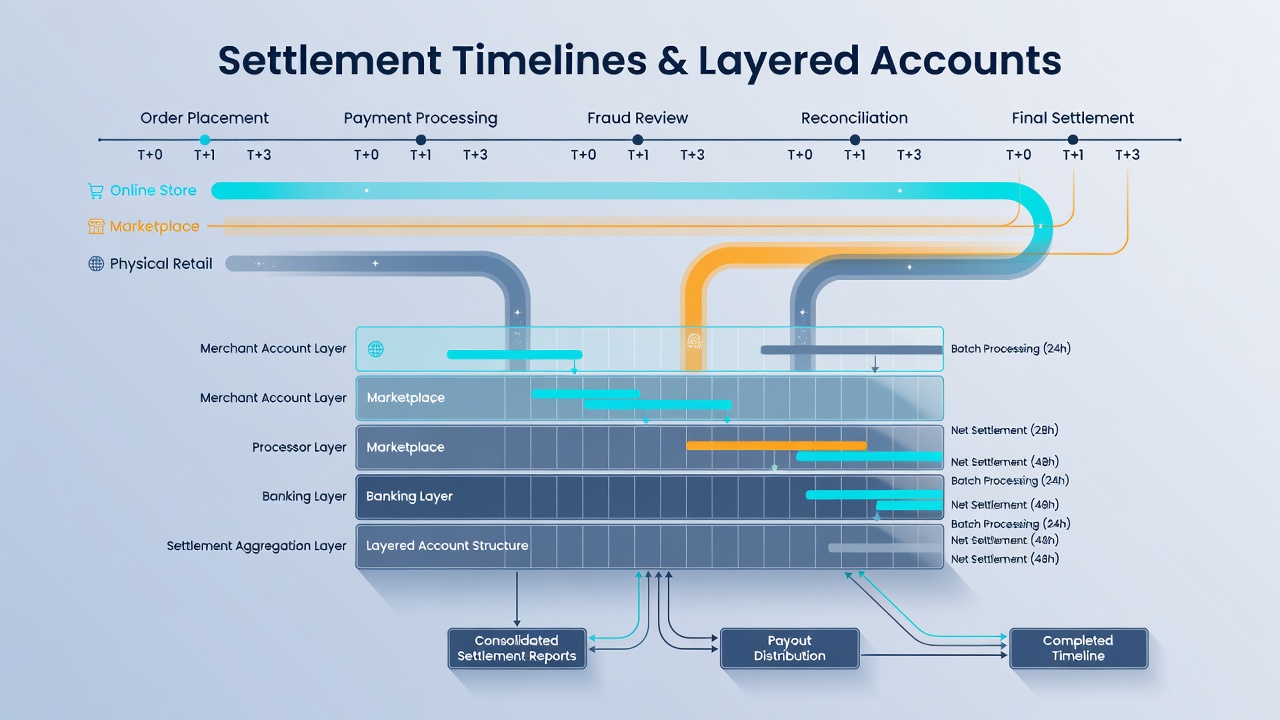
Settlement windows differ across channels because card networks apply distinct cutoff times and reserve policies. E-commerce transactions often follow a T+2 pattern in many markets, whereas point-of-sale batches can reach accounts on T+1 when merchants meet volume thresholds. Mobile app sales routed through digital wallets introduce additional variables tied to wallet provider rules, and layered accounts let finance teams map each of these patterns onto separate calendars. Researchers examining transaction data sets from 2025 found that merchants who segmented accounts by channel reduced the average time spent on discrepancy investigations by approximately 30 percent.
June 2026 brought updated reporting requirements from several central banks that require clearer disclosure of settlement expectations for multi-channel operators. Those changes prompted more retailers to adopt layered structures so they could generate channel-specific timelines that satisfy new disclosure standards. Processors responded by enhancing dashboard tools that display projected deposit dates for each sub-account alongside historical variance statistics.
Integration With Reconciliation Systems
Reconciliation platforms connect directly to layered account feeds, pulling authorization logs and settlement files into unified views. Each sub-account feed includes metadata such as channel identifier, processor batch number, and expected funding date, which software uses to flag variances before they reach the general ledger. Teams configure alerts when actual deposits deviate from mapped timelines by more than a set threshold, allowing quick investigation of network delays or bank-side holds. Studies conducted by academic researchers in payment systems indicate that automated mapping within layered structures improves accuracy of cash-flow forecasts, particularly for retailers managing seasonal spikes across multiple channels.
Cross-border operations add another layer of complexity because foreign exchange settlement rules and local banking holidays affect each sub-account differently. Layered structures accommodate these differences by permitting region-specific rules within the hierarchy, so a North American online channel can follow one calendar while an Asia-Pacific store channel follows another without manual intervention.
Observed Patterns in High-Volume Retail Networks
High-volume retailers document recurring patterns where certain channels consistently settle earlier or later than others due to processor routing logic. Weekend transactions, for example, often shift settlement into the following week across all layers, yet layered accounts make these shifts visible per channel rather than obscuring them in aggregate numbers. Industry reports from Payments Canada highlight that merchants using segmented account hierarchies experienced steadier working-capital planning during peak periods in late 2025 and early 2026.
Tokenization and recurring billing setups within sub-accounts introduce their own settlement schedules that processors handle separately from one-time purchases. Mapping tools overlay these recurring timelines onto the overall hierarchy, giving visibility into future deposit clusters that affect cash forecasting models.
Conclusion
Layered account structures enable precise mapping of settlement timelines across multi-channel retail environments by isolating each sales channel within its own sub-account. Processors, reconciliation systems, and updated regulatory frameworks continue to support this segmentation through enhanced reporting and automated feeds. Retail networks that implement these hierarchies gain clearer visibility into deposit patterns, which supports operational stability as transaction volumes grow and regulatory expectations evolve.