Real-Time Inventory Synchronization Driven by Transaction Confirmation Protocols in Multi-Channel Retail Setups
Lars Schulz · Aug 21, 2026

Real-Time Inventory Synchronization Driven by Transaction Confirmation Protocols in Multi-Channel Retail Setups
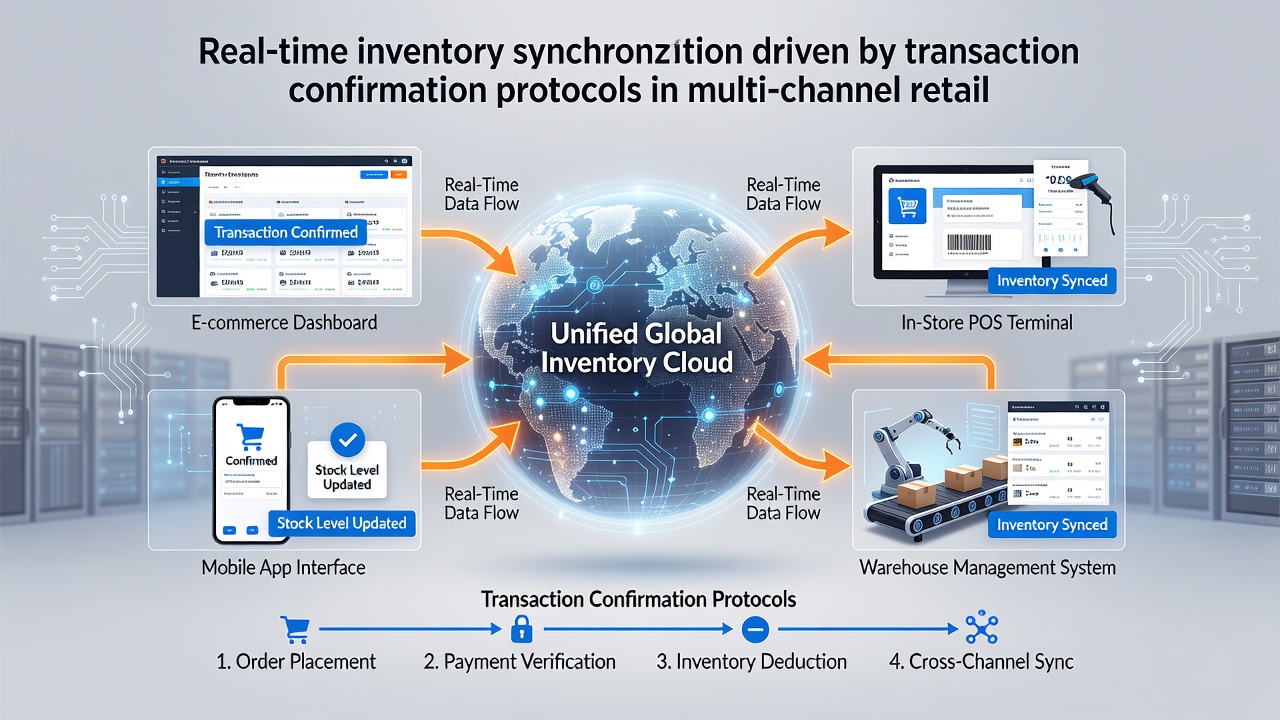
Retail operations across multiple channels rely on transaction confirmation protocols to trigger immediate inventory adjustments, and data from industry reports in August 2026 shows these systems now process updates in under two seconds on average for high-volume sellers. Transaction confirmations occur when a payment gateway verifies funds and authorizes the sale, at which point the protocol sends structured signals to connected inventory databases in each sales channel. This process ensures stock levels reflect actual commitments rather than pending carts or abandoned sessions, while separate rules handle partial shipments and returns through the same confirmation layer.
How Confirmation Protocols Trigger Updates
Payment networks transmit confirmation codes that include order identifiers, quantities, and channel origins, and these codes feed directly into inventory management platforms via standardized APIs. Retailers configure rules so that an approved transaction subtracts items from central stock counts and simultaneously updates point-of-sale terminals in physical locations plus mobile app inventories. Systems avoid double-counting because each confirmation carries a unique token that locks the record until reconciliation completes at the end of the day.
Multi-channel setups introduce added complexity when one order spans several fulfillment points, yet protocols handle this by splitting the confirmation into sub-messages that allocate stock from specific warehouses or stores. Research from the National Retail Federation indicates that synchronized environments reduced stockouts by 18 percent during peak periods in early 2026, as updates propagate without manual intervention.
Integration Across Channels
Online storefronts, physical outlets, and marketplace integrations each maintain local caches that refresh upon receipt of confirmation events, and observers note that latency drops significantly when edge servers sit close to payment processors. A single purchase made through a mobile app, for example, deducts from both the app's displayed quantity and the shared backend ledger, while the in-store system receives the same signal to prevent overselling the same unit. Retailers that operate temporary pop-ups or seasonal kiosks often link mobile terminals to these same confirmation streams so inventory stays consistent even when the primary system experiences brief outages.
According to figures released by Statistics Canada in mid-2026, Canadian retailers adopting synchronized confirmation protocols reported a 23 percent improvement in order accuracy across channels during the first half of the year. The same data set shows that integration costs have fallen as open standards replace proprietary middleware, allowing smaller operators to connect legacy point-of-sale hardware without full system replacements.
Technical Mechanisms and Data Flows
Confirmation protocols use event-driven architectures where each approved transaction generates a lightweight message that travels through message queues to inventory services, and these queues buffer spikes during high-traffic events such as flash sales. Encryption standards protect the payload while checksums verify that quantities and SKUs match the original order, preventing drift between channels. When a confirmation arrives, the system first checks for existing reservations created during the authorization stage, then commits the final deduction before broadcasting the change to all subscribed endpoints.
Retailers sometimes layer additional business rules on top of the core protocol, such as reserving buffer stock for high-velocity items or triggering automatic replenishment orders once thresholds are crossed. These rules execute within the same transaction window, so inventory reflects both sales and anticipated demand without separate batch jobs. Studies from the University of Melbourne's retail technology group found that Australian chains using such layered rules maintained 99.4 percent inventory accuracy across online and physical locations throughout 2025 and into August 2026.
Operational Impacts and Patterns
Merchants observe that real-time synchronization reduces the frequency of manual stock counts because discrepancies surface immediately rather than accumulating over days. Staff in distribution centers receive alerts when a confirmation depletes a bin below safety levels, allowing faster restocking decisions. In multi-channel environments the same confirmation can initiate cross-channel transfers, for instance moving units from an overstocked store to an online fulfillment hub when the protocol detects an imbalance.
Payment processors and inventory platforms share audit logs that trace each confirmation back to its source transaction, which simplifies reconciliation at month-end. European retailers following guidelines from the European Central Bank on transaction data handling have incorporated these logs into their reporting, and compliance teams note fewer discrepancies during external audits. The pattern holds across different business scales, from single-location independents to national chains, because the confirmation layer operates independently of the underlying sales volume.
Conclusion
Transaction confirmation protocols continue to serve as the primary driver for real-time inventory synchronization in multi-channel retail, linking payment events directly to stock records across digital and physical points of sale. Current implementations in August 2026 demonstrate consistent performance gains in accuracy and speed, supported by standardized messaging and widespread API adoption. Retail networks that maintain these connections report fewer fulfillment errors and more reliable availability data for customers regardless of the channel used to place an order.