Syncing Mobile Terminals with Backend Ledgers: Patterns in Transaction Matching for Temporary Retail Setups
Tina Carter · Jun 21, 2026
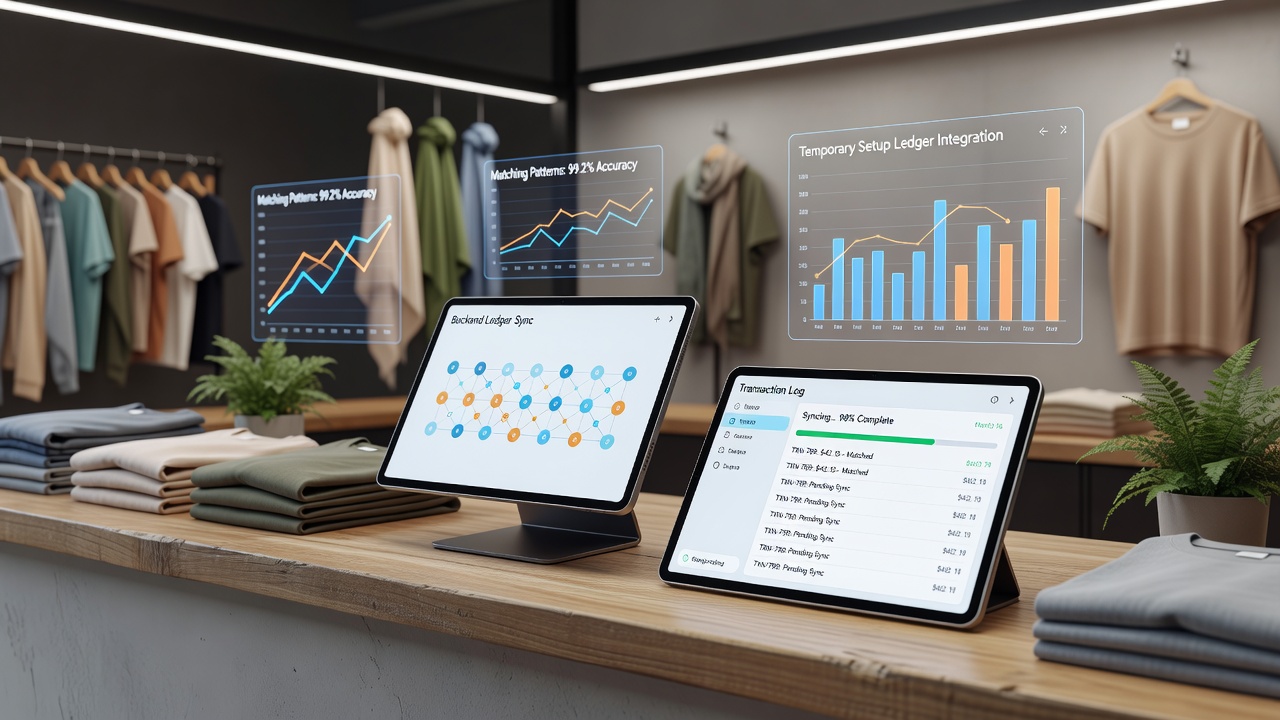
Syncing Mobile Terminals with Backend Ledgers: Patterns in Transaction Matching for Temporary Retail Setups
Temporary retail setups such as pop-up shops, seasonal markets, and event-based stalls rely on mobile terminals to process transactions in locations without permanent infrastructure, and these devices must connect reliably to backend ledgers to maintain accurate records. Data synchronization occurs through wireless networks that transmit sale details including amounts, timestamps, and payment methods, while backend systems match incoming entries against expected patterns to detect discrepancies early.
Core Mechanics of Terminal-Ledger Connections
Mobile terminals capture transaction data at the point of sale and forward batches or real-time streams to central ledgers using encrypted APIs that standardize formats across different hardware models. In environments where connectivity fluctuates, terminals store records locally before uploading during stable windows, and matching algorithms compare uploaded entries against ledger expectations by checking sequence numbers and checksums to confirm completeness. Researchers at institutions studying retail technology note that temporary setups often experience higher volumes of partial uploads because network interruptions force terminals to retry transmissions multiple times before full reconciliation happens.
Transaction matching follows identifiable patterns that include grouping entries by merchant identifier and time window, then cross-referencing against inventory logs or receipt numbers to verify each sale reached the ledger without alteration. Systems flag mismatches when amounts differ by even small increments or when timestamps fall outside expected ranges, prompting automated reviews that operators can address before end-of-day closing procedures begin.
Patterns Observed in High-Volume Temporary Environments
Analysis of transaction flows in temporary retail reveals recurring sequences where mobile terminals generate clusters of low-value sales during peak hours, followed by larger aggregated batches sent to ledgers during quieter periods. These patterns help matching engines prioritize certain transaction types for immediate verification while deferring others, and data from the Bank for International Settlements indicates that such clustering reduces overall reconciliation time by allowing systems to process bulk uploads more efficiently than scattered individual entries.
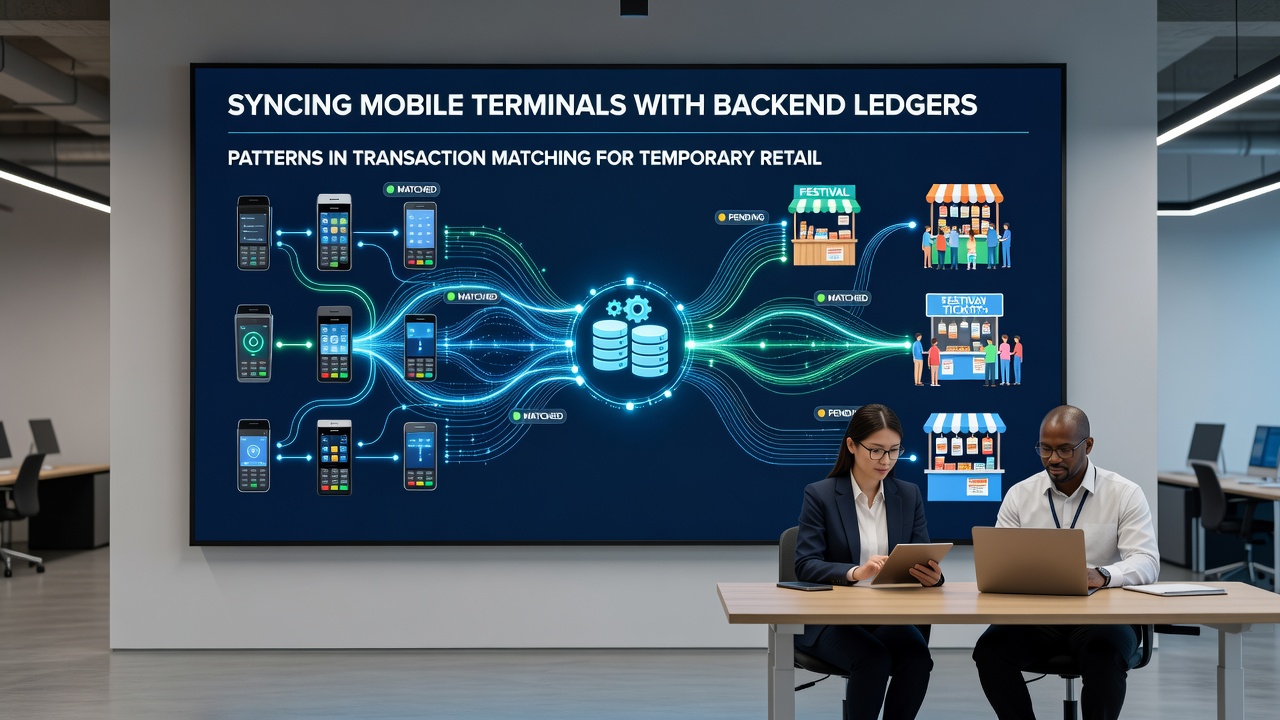
Another common pattern involves duplicate detection routines that scan for repeated authorization codes or identical card tokens arriving from the same terminal within short intervals. Temporary retail operators often see these duplicates arise from customers attempting multiple taps or from network retries that resend the same record, and ledger systems apply time-based filters to isolate genuine repeats from technical artifacts. In June 2026, figures released by payment network operators showed that duplicate rates in event-based retail reached 3.2 percent on average, with matching protocols resolving most cases through automated timestamp comparison before manual intervention became necessary.
Technical Approaches to Reliable Matching
Backend ledgers employ rule-based engines alongside machine learning models to identify expected transaction sequences based on historical data from similar temporary setups. These models learn typical volume curves for markets or festivals and adjust matching thresholds accordingly, so that a sudden spike in activity does not automatically trigger alerts unless it deviates from established patterns. European Central Bank documentation on retail payment systems highlights how such adaptive thresholds have improved match rates in seasonal operations where daily volumes can vary by factors of five or more between setup days and peak trading periods.
Encryption and tokenization play direct roles in preserving data integrity during transit from mobile terminals to ledgers, because any corruption introduced by transmission errors would cause systematic matching failures. Terminals apply end-to-end encryption to each record, and ledgers decrypt and validate signatures before attempting pattern matching, which prevents tampered entries from entering the primary accounting stream. Operators in temporary retail environments configure fallback procedures that allow offline terminals to queue signed records for later verification once connectivity returns, ensuring that delayed uploads still align with ledger expectations through preserved sequence metadata.
Implementation Considerations Across Different Scales
Small-scale temporary retailers typically integrate mobile terminals with cloud-based ledgers through standardized payment gateways that handle matching logic as part of their service, while larger operations maintain custom ledger instances that incorporate additional business rules specific to inventory or tax reporting. Matching accuracy improves when terminals and ledgers share synchronized clocks, because time drift quickly produces apparent mismatches that require manual correction. Studies conducted by academic groups examining retail payment infrastructure demonstrate that enforcing network time protocol updates on all devices reduces such clock-related discrepancies by measurable margins in field deployments.
Integration testing before events begins helps surface configuration mismatches that could otherwise disrupt transaction flows once operations start. Test scenarios simulate network drops and partial uploads to confirm that matching engines correctly identify and reconcile incomplete batches when full data arrives later. Temporary retail setups that conduct these rehearsals report fewer end-of-event reconciliation issues compared with those that skip preparatory steps, according to aggregated industry observations.
Conclusion
Effective syncing between mobile terminals and backend ledgers depends on recognizing and accommodating the specific transaction patterns that emerge in temporary retail environments. Matching routines built around sequence verification, duplicate filtering, and adaptive thresholds enable systems to maintain accurate records even when connectivity and operational conditions vary widely. Continued refinement of these patterns supports reliable financial tracking across short-term retail deployments that serve diverse customer bases throughout the year.