The Mechanics of Risk Layering in Merchant Account Setup for Recurring Digital Sales Platforms
Lars Schulz · Jul 17, 2026
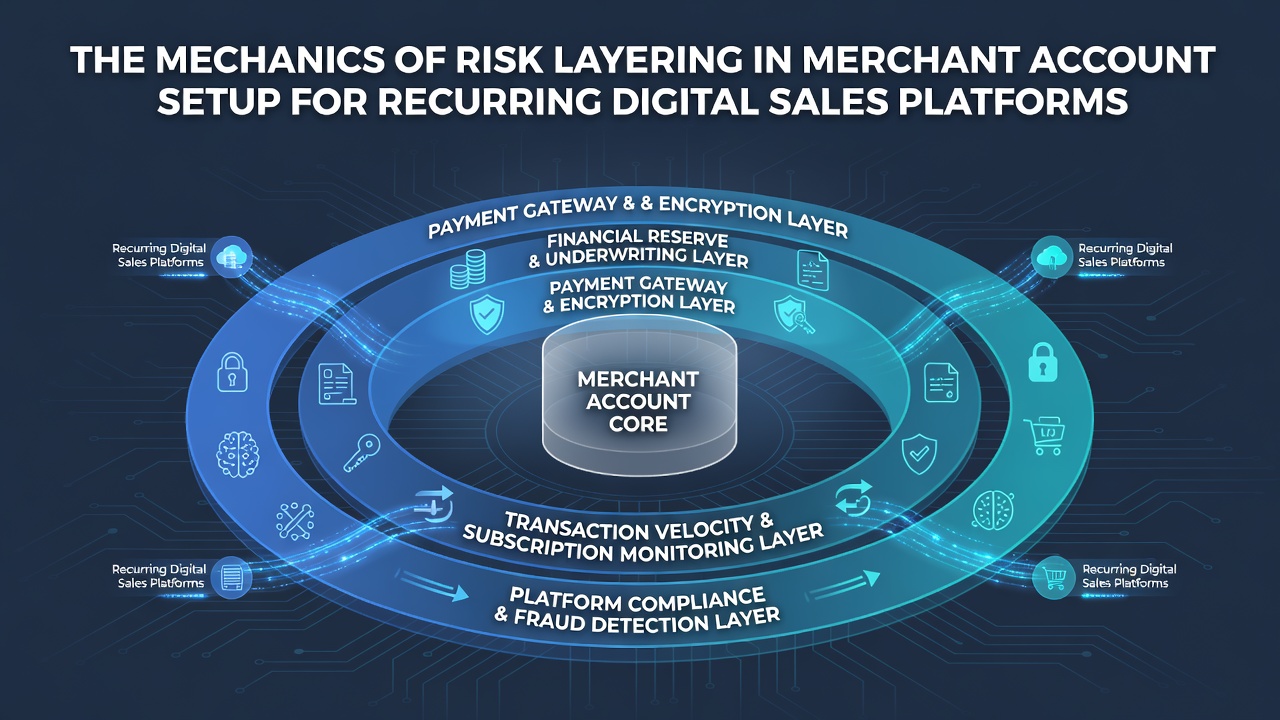
The Mechanics of Risk Layering in Merchant Account Setup for Recurring Digital Sales Platforms
Merchant account providers apply structured risk layering when evaluating applications from recurring digital sales platforms, and this process begins with initial data collection that feeds into multiple verification tiers. Providers collect business details, transaction volume projections, and historical performance metrics before assigning preliminary risk scores that determine subsequent review depth. Data from the Federal Reserve Bank of New York indicates that subscription-based merchants face layered scrutiny because recurring charges introduce variables such as customer retention rates and billing cycle consistency.
Core Components of Initial Risk Assessment
Processors categorize applications into risk bands using quantitative thresholds that combine credit history, business longevity, and projected chargeback ratios, while qualitative factors such as product type and target market receive separate evaluation. One common approach stacks financial stability indicators against operational signals, and this creates a composite profile that guides approval conditions like reserve requirements or velocity limits. Observers note that digital platforms selling software subscriptions or membership services often encounter elevated baseline scores because their revenue streams depend on ongoing authorization success rather than one-time purchases.
Industry and Transaction Pattern Layers
Recurring models trigger additional industry classification layers since certain verticals carry higher inherent risk profiles according to network rules from card schemes. Providers map merchant categories against historical data sets that track approval rates across similar businesses, and adjustments occur when projected monthly volumes exceed established benchmarks for the assigned category. In July 2026, updated reporting from the European Central Bank highlighted how digital service merchants in the EU saw refined categorization protocols that separated content platforms from utility-style subscriptions to refine risk weighting.
Verification and Documentation Stacking
Documentation requirements build progressively as risk layers accumulate, with basic identity verification giving way to financial statements, processing history, and customer agreement samples when initial flags appear. Application systems route files through automated checks that flag inconsistencies before human analysts examine supporting evidence for patterns that suggest future instability. Those who've studied approval workflows report that platforms submitting incomplete recurring billing terms often receive conditional approvals that mandate additional monitoring periods before full access unlocks.
Technical integration points receive their own evaluation tier because recurring billing relies on stored credentials and scheduled authorization requests that must align with processor security standards. Systems validate API compatibility and test transaction simulation results against expected failure rates, while any deviation prompts further review of backend configurations. Research from the University of Toronto's Rotman School of Management shows that platforms demonstrating robust retry logic and clear cancellation flows achieve smoother passage through these technical layers.
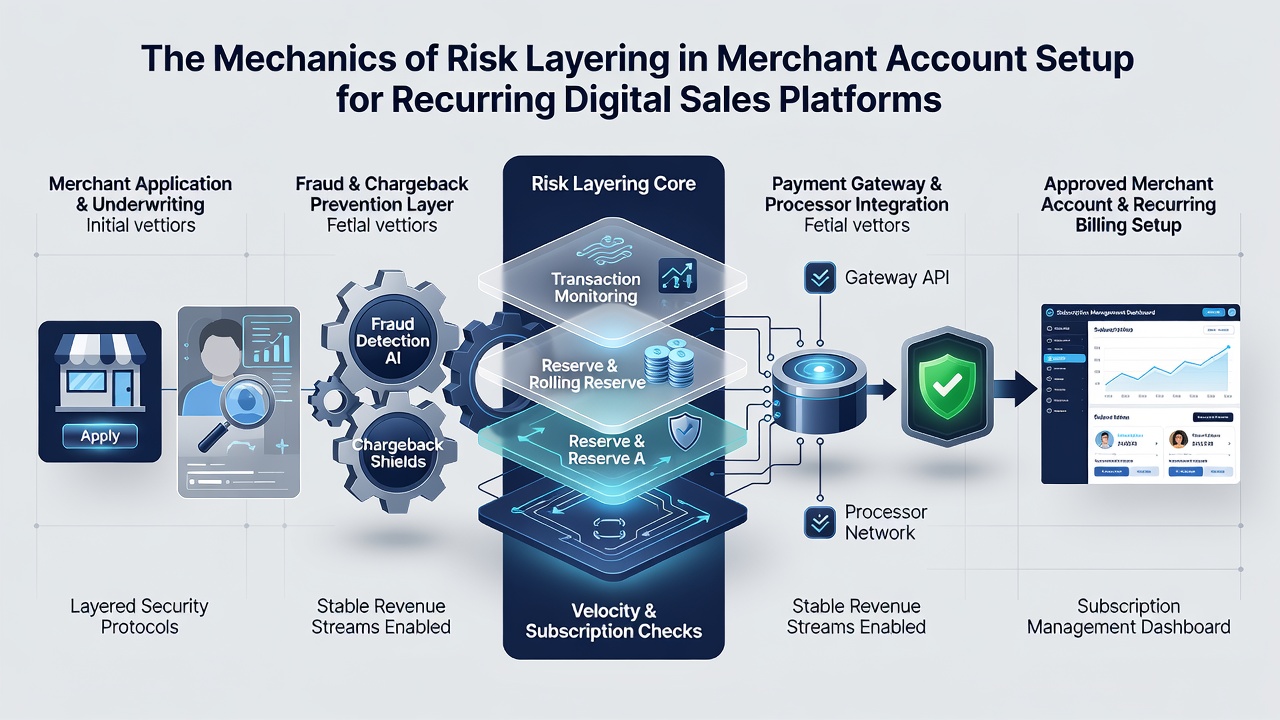
Reserve and Limit Calibration Mechanisms
Once layered assessments conclude, providers calibrate financial safeguards such as rolling reserves or daily caps that scale according to the cumulative risk score. These controls adjust dynamically when early transaction data reveals deviations from submitted projections, and merchants receive notifications through standardized reporting channels. Australian Securities and Investments Commission guidelines from 2025 emphasize transparent communication of these mechanisms to ensure recurring platforms understand how performance metrics influence reserve release schedules.
Ongoing Adjustment Protocols
Risk layering does not conclude at account activation because processors maintain review cycles that incorporate live performance indicators including authorization rates and dispute volumes. Automated alerts trigger when metrics cross defined thresholds, prompting re-evaluation that may add or remove conditions based on observed patterns. Platforms that maintain consistent customer communication and transparent billing practices often see reductions in applied layers over time, whereas sudden spikes in failed transactions can reinstate stricter controls.
Conclusion
The mechanics of risk layering provide merchant account providers with systematic methods for managing exposure while supporting recurring digital sales operations. Multiple data sources demonstrate that structured tiered reviews balance approval speed against long-term stability across varied business models. Continued refinement of these processes reflects evolving transaction patterns and regulatory expectations in digital commerce environments.