Tracing Authorization Success Factors in Credit Card Networks for Subscription Retailers Using Advanced Verification Methods
Lars Schulz · Jun 14, 2026
Tracing Authorization Success Factors in Credit Card Networks for Subscription Retailers Using Advanced Verification Methods
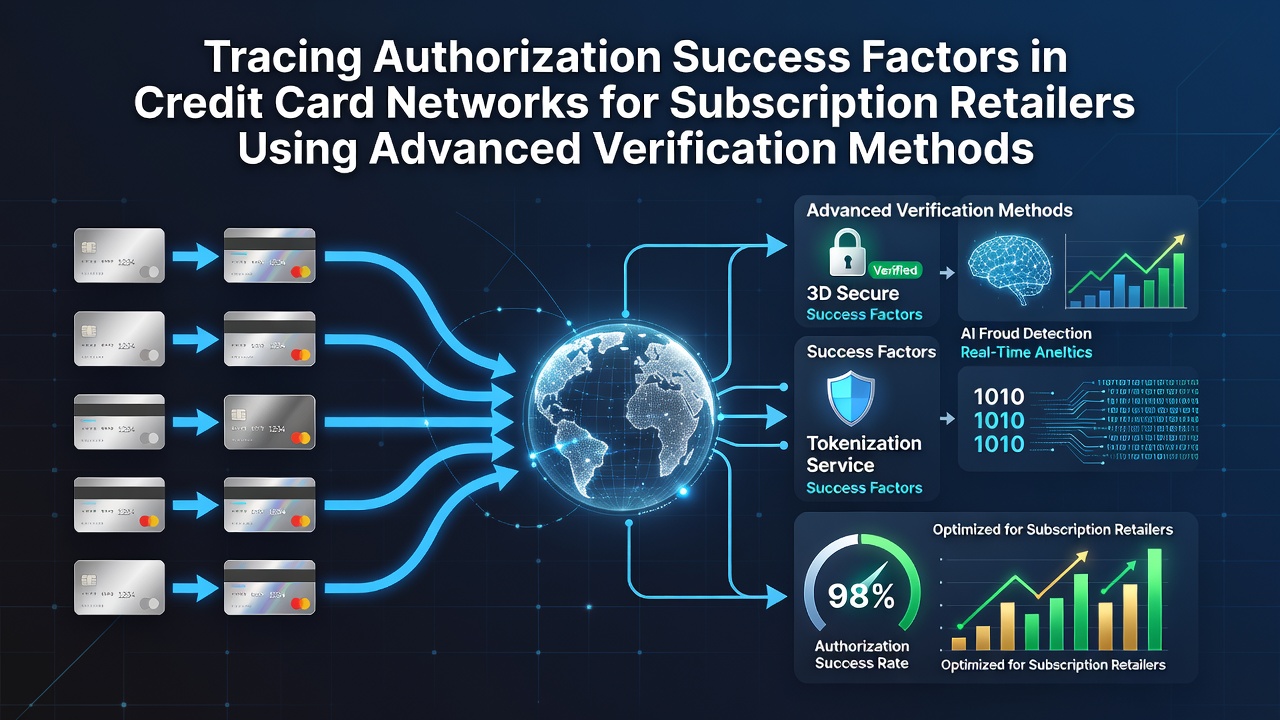
Authorization processes in credit card networks determine whether recurring transactions from subscription retailers receive approval from issuing banks, and success hinges on multiple interconnected factors that advanced verification methods help strengthen. Retailers who manage monthly billing cycles encounter distinct patterns where initial approvals do not always predict ongoing success rates, because issuers evaluate each transaction against real-time risk signals even when prior charges cleared without issue. Data from payment processors indicates that subscription merchants experience average approval rates between 75 and 88 percent depending on merchant category code and geographic distribution of cardholders, with declines often stemming from address verification mismatches or velocity checks rather than outright fraud.
Core Elements Shaping Authorization Outcomes
Network rules established by card brands require merchants to transmit specific data elements during each authorization request, including cardholder verification values and tokenized credentials that replace primary account numbers after initial onboarding. Subscription platforms that integrate these elements consistently record higher pass rates because issuers receive richer context about transaction legitimacy. Observers note that when retailers update billing descriptors to match customer expectations, fewer transactions trigger soft declines that require reattempt logic. Research from the Bank for International Settlements shows that standardized data formatting across acquirers reduces processing friction in cross-border recurring flows, particularly for retailers serving customers in multiple regions simultaneously.
Advanced verification layers extend beyond basic checks to incorporate device fingerprinting, behavioral biometrics, and machine learning models that score risk before the authorization message reaches the issuer. These systems analyze typing patterns, mouse movements, and historical purchase sequences to generate trust scores that accompany the transaction request. Subscription retailers adopting such methods report measurable improvements in approval percentages because issuers incorporate the additional signals into their decision engines. In June 2026 several major processors expanded support for real-time biometric handoff protocols that allow issuers to request facial or fingerprint confirmation directly through mobile SDKs during high-value subscription renewals.
Role of Tokenization and Data Synchronization
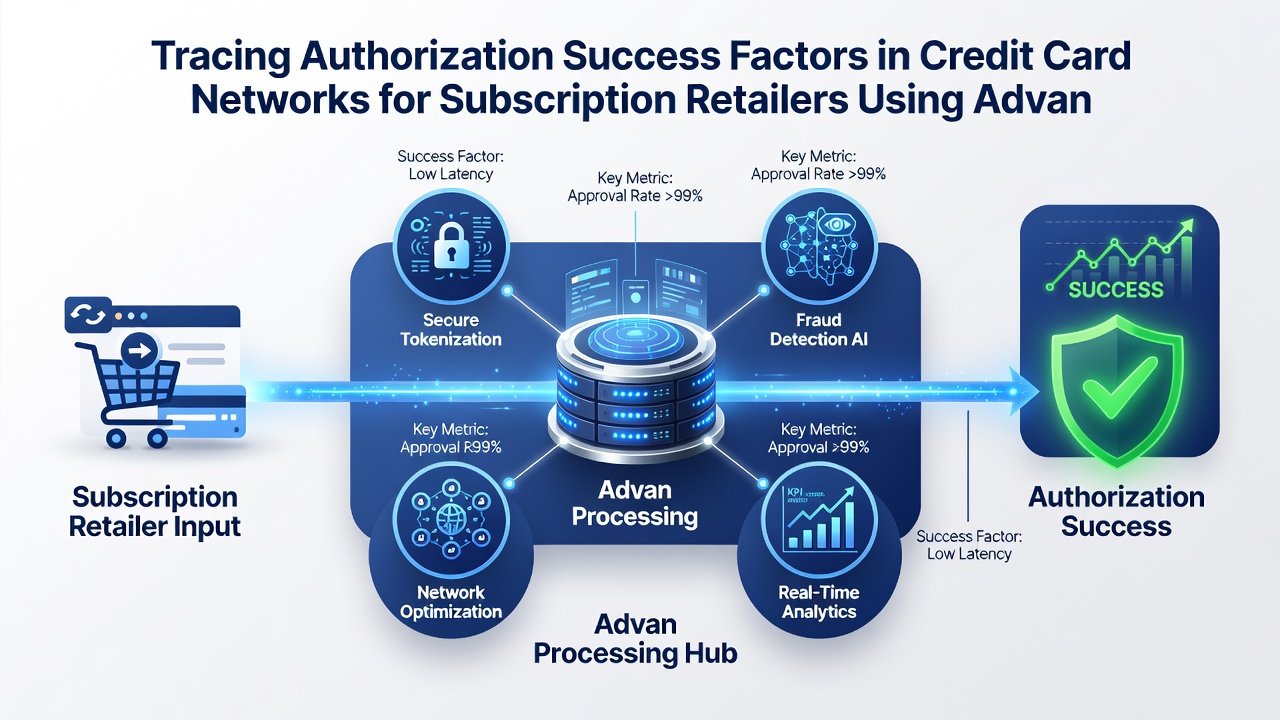
Token vaults maintained by payment gateways replace sensitive card details with unique identifiers that subscription systems store for future billing attempts, thereby limiting exposure while preserving authorization continuity when cards expire or get reissued. Retailers that maintain synchronized token status across multiple processors experience fewer interruptions because replacement tokens propagate automatically when issuers update account information. Evidence from industry reports reveals that merchants utilizing network token services achieve authorization success rates up to 12 percent higher than those relying solely on legacy credential storage methods. Synchronization challenges arise primarily when cardholders switch banks or when regional data residency rules require separate token repositories for different jurisdictions.
Impact of Regulatory and Network Updates in 2026
Updates to the Payment Services Directive in the European Union and similar frameworks elsewhere require stronger customer authentication for recurring payments above certain thresholds, prompting subscription retailers to embed step-up verification flows that issuers accept as sufficient proof of cardholder consent. Retailers who align their verification sequences with these mandates encounter fewer authorization blocks because issuers recognize the completed authentication steps. According to statistics published by the European Central Bank, regions enforcing consistent application of strong customer authentication witnessed a 9 percent reduction in false declines for subscription categories between 2024 and 2026. Merchants operating across both EU and non-EU markets often deploy region-specific verification paths to satisfy divergent requirements while preserving unified billing infrastructure.
Case examples demonstrate how layered verification operates in practice. One subscription service provider implemented device-based risk scoring alongside traditional AVS and CVV checks, resulting in a documented 7 percent lift in recurring approval rates over six months while maintaining stable fraud loss figures. Another platform integrated issuer-specific authentication APIs that trigger only when risk models exceed predefined thresholds, reducing customer friction during routine renewals yet preserving security for anomalous patterns. These approaches illustrate how advanced methods complement rather than replace foundational authorization elements such as merchant category accuracy and descriptor consistency.
Conclusion
Authorization success for subscription retailers ultimately depends on coordinated application of foundational network requirements and advanced verification techniques that supply issuers with timely, context-rich signals. Retailers tracking performance metrics across authorization attempts, retry logic, and token lifecycle events gain visibility into which verification combinations produce the most reliable outcomes. Continued evolution of these methods through 2026 reflects ongoing adjustments by networks and processors to balance security, regulatory compliance, and operational efficiency across recurring billing environments.