What Role Do Hardware Security Modules Play in Payment Data Protection for Scaling Retail Businesses?
Felix Schmid · Aug 2, 2026
What Role Do Hardware Security Modules Play in Payment Data Protection for Scaling Retail Businesses?
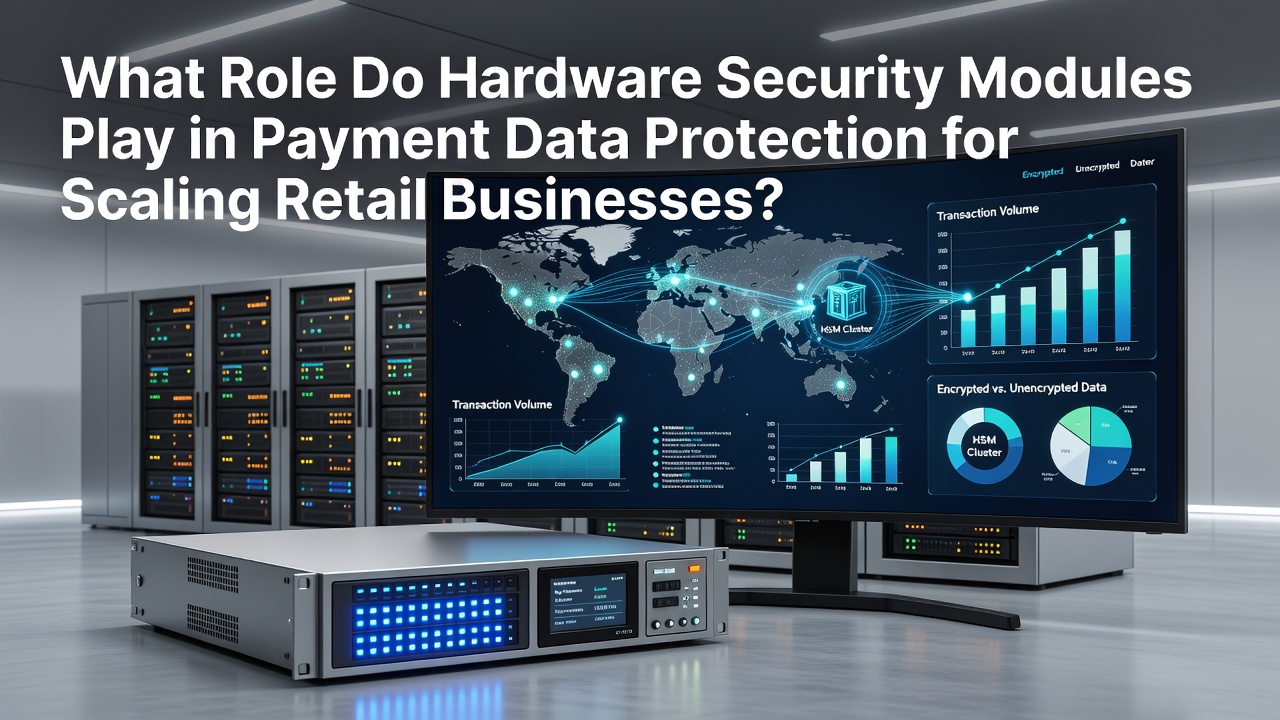
Hardware security modules serve as specialized devices that generate, store, and manage cryptographic keys while performing encryption operations directly within tamper-resistant hardware environments. Retail businesses that process growing volumes of payment transactions rely on these modules to isolate sensitive data from general-purpose servers and software applications. Organizations scale their operations when transaction counts rise, and HSMs maintain consistent protection levels across expanding networks without exposing keys to memory or operating systems.
Core Functions of HSMs in Payment Environments
Payment data flows through multiple stages during a retail transaction, and HSMs handle the cryptographic tasks at each point. They encrypt cardholder data at the point of capture, manage session keys during authorization requests, and support tokenization processes that replace primary account numbers with non-sensitive tokens. Data shows that PCI DSS requirements mandate cryptographic key protection under strict controls, and HSMs fulfill those controls by keeping private keys inside certified hardware boundaries that resist physical and logical attacks.
Retail networks that expand across multiple locations or channels introduce additional endpoints where payment data appears. HSMs deployed in clustered configurations allow synchronized key management across those endpoints while preserving a single source of trust. According to the PCI Security Standards Council documentation, certified HSMs meet evaluation standards that verify resistance to side-channel attacks and unauthorized extraction attempts. Retail operators integrate these devices with payment gateways and internal ledgers so that decryption occurs only inside the HSM boundary during legitimate processing steps.
Integration Patterns for Growing Retail Operations
Scaling retail businesses often adopt cloud-hosted or hybrid infrastructure, and HSM offerings have evolved to support both models. On-premises appliances connect directly to local processing servers, whereas cloud HSM services from providers deliver equivalent cryptographic operations through secure APIs. Researchers at NIST have documented performance benchmarks showing that modern HSMs sustain thousands of cryptographic operations per second, which matches the throughput demands of high-volume retail platforms during peak periods.
Those who manage expanding merchant accounts frequently connect HSM infrastructure to existing token vaults and fraud detection systems. The modules generate and rotate keys on scheduled intervals without manual intervention, reducing the window during which any single key remains active. Retail systems that handle recurring billing or subscription models benefit when HSMs store the master keys used to derive per-customer encryption values, ensuring that a breach at one application layer does not compromise the entire key hierarchy.
Compliance and Audit Considerations
Payment card industry audits examine how cryptographic material is protected throughout its lifecycle. HSMs produce detailed logs of every key operation, and those logs feed directly into compliance reporting platforms. European regulatory frameworks such as those overseen by the European Banking Authority require evidence that encryption keys remain under hardware control rather than software-only mechanisms. Retail organizations that operate across borders therefore configure HSMs to satisfy the strictest applicable standard in each jurisdiction.
Independent testing laboratories certify HSM models against FIPS 140-2 or FIPS 140-3 levels, and merchants reference those certifications during vendor selection. When transaction volumes increase, the same certified devices continue to satisfy audit requirements without requiring re-certification of the underlying hardware. Observers note that businesses maintaining separate HSM clusters for production and disaster-recovery sites achieve continuous compliance even when failover events occur.
Operational Deployment in Retail Networks
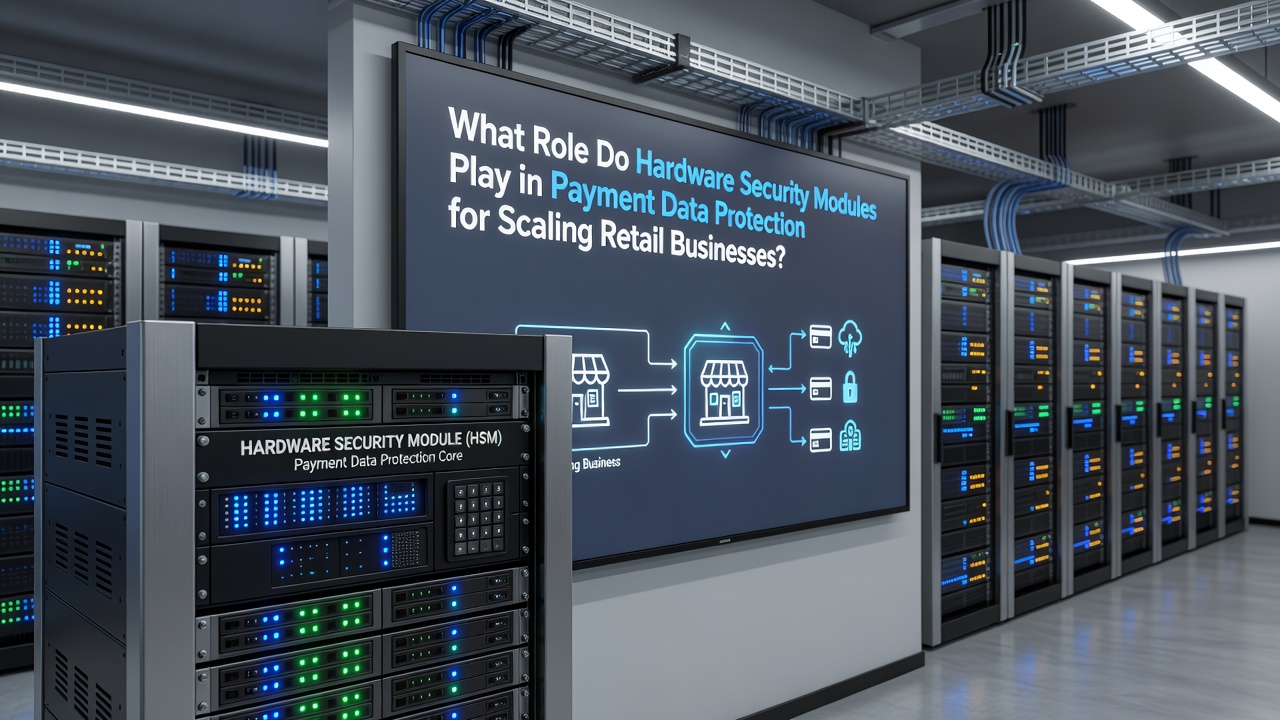
Retail chains that open new store locations or launch online channels must replicate cryptographic protections at each site. Centralized HSM management consoles allow security teams to push updated key policies across distributed appliances while maintaining an immutable audit trail. Application developers access HSM functions through standardized APIs such as PKCS#11 or Microsoft CNG, which abstracts the hardware details and reduces the chance of implementation errors during rapid feature releases.
Studies from academic institutions focusing on applied cryptography indicate that hardware isolation prevents several classes of memory-scraping attacks that have affected software-only key storage solutions. Retail IT departments therefore schedule regular firmware updates issued by HSM vendors to address newly discovered side-channel vulnerabilities before those weaknesses can be exploited in live payment environments.
Conclusion
Hardware security modules anchor the cryptographic foundation that supports payment data protection as retail businesses increase transaction volumes and geographic reach. Their ability to isolate keys, accelerate operations, and generate compliance-grade audit records makes them integral components of modern payment architectures. Organizations that align HSM deployments with both current throughput needs and anticipated growth maintain consistent security posture across evolving retail networks.